 Save
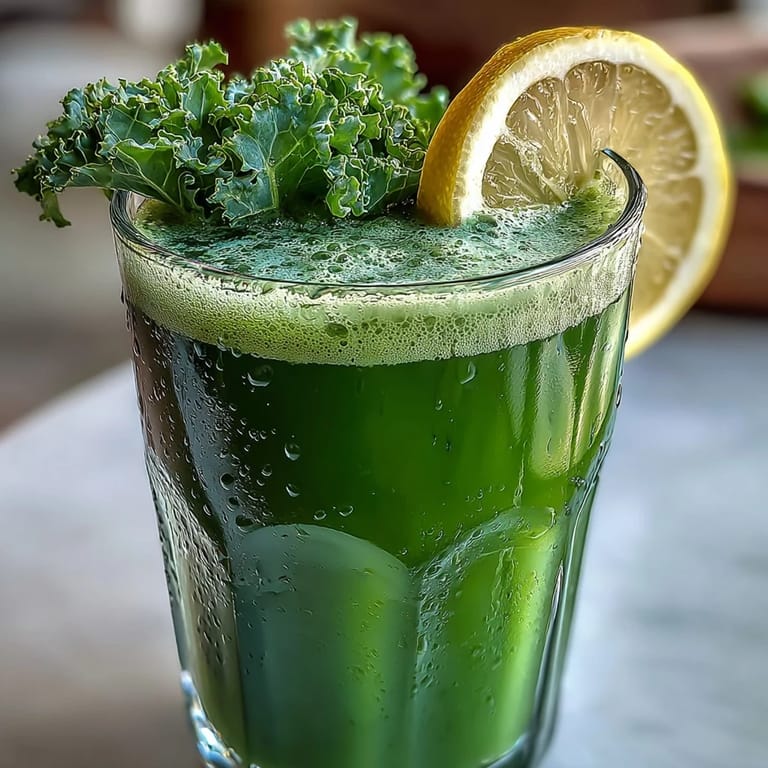
Save My roommate swore by green juice, but I was skeptical until the morning I woke up feeling oddly energized after she handed me a glass of her cabbage-kale concoction. That sharp ginger bite followed by bright lemon made me sit up and actually pay attention to what I was drinking. Three days of making this became a habit, and now I can't imagine a Monday without it.
I made this for my sister after she complained about afternoon crashes, and watching her face when she realized green juice didn't have to taste like drinking grass was worth every second. She's now the one making batches for her coworkers, which somehow feels like a small victory.
Ingredients
- Green cabbage: The workhorse here, packed with more nutrients than you'd guess from something that sits quietly in your crisper drawer.
- Kale leaves: Strip those stems completely or you'll get stuck chewing them, trust me on this one.
- Cucumber: Your secret weapon for making the whole thing drinkable without tasting like punishment.
- Celery: Adds mineral depth that makes the finish feel cleaner than you'd expect.
- Green apple: A small amount goes surprisingly far, sweetening without overwhelming the greens.
- Lemon juice: Fresh squeezed, because bottled tastes like regret by comparison.
- Fresh ginger: A full inch might seem aggressive, but it becomes the magnetic center everything orbits around.
- Cold water: Only needed if you're blending instead of juicing, and it thins things just enough.
Tired of Takeout? 🥡
Get 10 meals you can make faster than delivery arrives. Seriously.
One email. No spam. Unsubscribe anytime.
Instructions
- Rinse everything like you mean it:
- Cold running water over every leaf and vegetable, paying special attention to the kale's wrinkles where dirt loves to hide. Pat everything dry so your juicer doesn't get bogged down.
- Chop with intention:
- Cut things into pieces your juicer can actually handle without jamming, which usually means roughly the size of your thumb. Peel the ginger and cucumber, core the apple, and remove those tough kale stems without hesitation.
- Feed the juicer methodically:
- Start with the softer vegetables first, then move to the harder ones, ending with ginger to push everything through. The rhythm matters more than you'd think.
- Or blend if that's your world:
- Throw everything in with the water and blend until it's completely smooth, which takes longer than most people expect. Strain through a fine mesh sieve if you want elegance, or leave the pulp in if you like it thick.
- Serve it now, not later:
- Pour over ice immediately because oxidation starts stealing nutrients the moment air hits the juice. Drink it while it still tastes like something alive just happened.
 Save
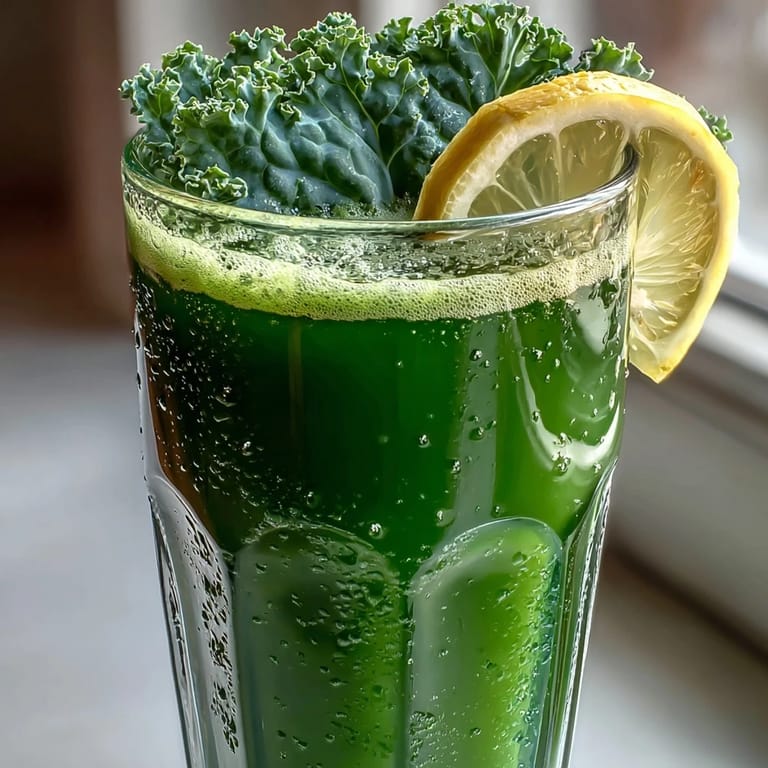
Save My neighbor once asked why I was making juice instead of eating the vegetables whole, and I realized then that this isn't about being healthier than anyone else—it's about speed and absorption and the small ritual of making something intentional before the day pulls you under. That's when it stopped being a trend and started being mine.
Juicer Versus Blender
A juicer extracts only the liquid, leaving you with a bright, clean drink that's almost ethereal in its lightness. A blender keeps everything, which means more fiber but also more texture, and honestly both approaches work depending on whether you want to sip something delicate or something substantial. I switch between them based on what my kitchen rhythm feels like that morning.
Making It Your Own
The formula here is flexible in ways most recipes refuse to be. If pears are calling to you, add half of one for sweetness without the sugar spike an extra apple would bring. Some days I add a handful of spinach because it's milder than kale and disappears entirely, other days I bump up the ginger because I'm fighting a cold or just want that warmth.
Storage and Timing
Fresh juice is best within hours, though if you absolutely must make it ahead, a sealed glass container in the coldest part of your fridge buys you maybe a day before everything starts separating and losing its vibrance. The pulp left behind isn't waste—it makes excellent compost or can thicken smoothies into something closer to soft serve.
- Store juice in glass, not plastic, because plastic absorbs flavors and lets air in through invisible channels.
- If separation happens and your juice looks sad, just stir it back together and pretend it never happened.
- Make this when you have a quiet moment because rushing through the prep ruins the whole experience.
 Save
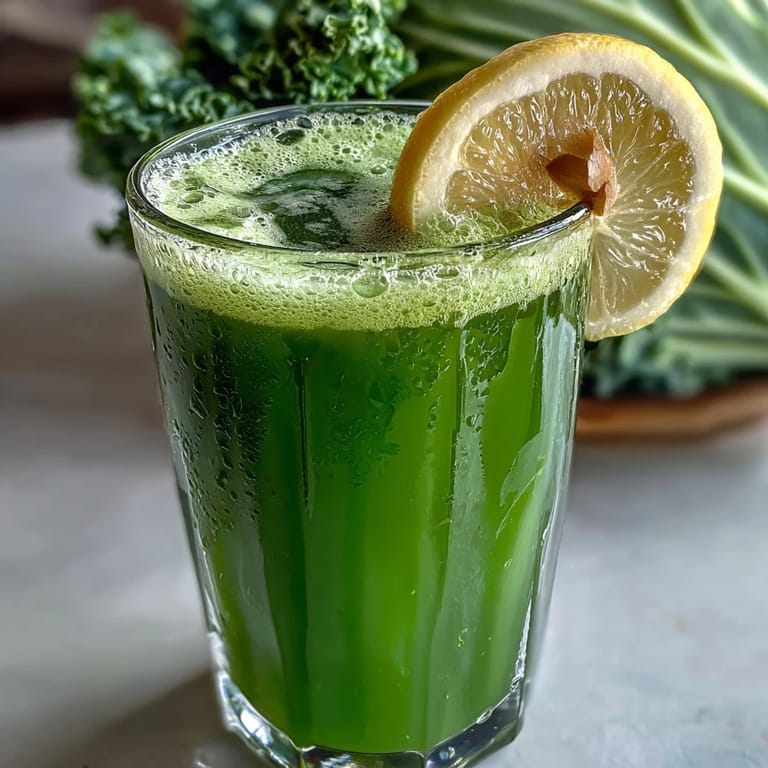
Save This juice reminds me that sometimes the simplest things—raw vegetables and lemon and the sound of a juicer working—become the moment you pause and actually notice you're alive. Make it, drink it slow, and see what happens.
Recipe FAQs
- → Can I make this juice ahead of time?
Fresh is best for maximum nutrients, but you can store it in an airtight container in the refrigerator for up to 24 hours. The juice may separate, so give it a good shake before drinking.
- → What type of juicer works best?
Both centrifugal and masticating juicers work well with these ingredients. If using a blender, you'll need to strain the mixture through a fine mesh sieve or nut milk bag to achieve a smooth consistency.
- → How can I make this juice sweeter?
Add half a ripe pear or an extra green apple to naturally increase sweetness. You can also reduce the ginger amount if you prefer a milder flavor profile.
- → What can I do with the leftover pulp?
The fibrous pulp can be added to smoothies for extra texture, mixed into veggie burgers, or composted. Some people also use it as a base for vegetable broth or add it to baked goods like muffins.
- → Is this suitable for beginners?
This is an excellent beginner-friendly green juice. The apple and cucumber provide familiar flavors while introducing nutrient-dense leafy greens. Start with less ginger and gradually increase as your palate adjusts.