 Save
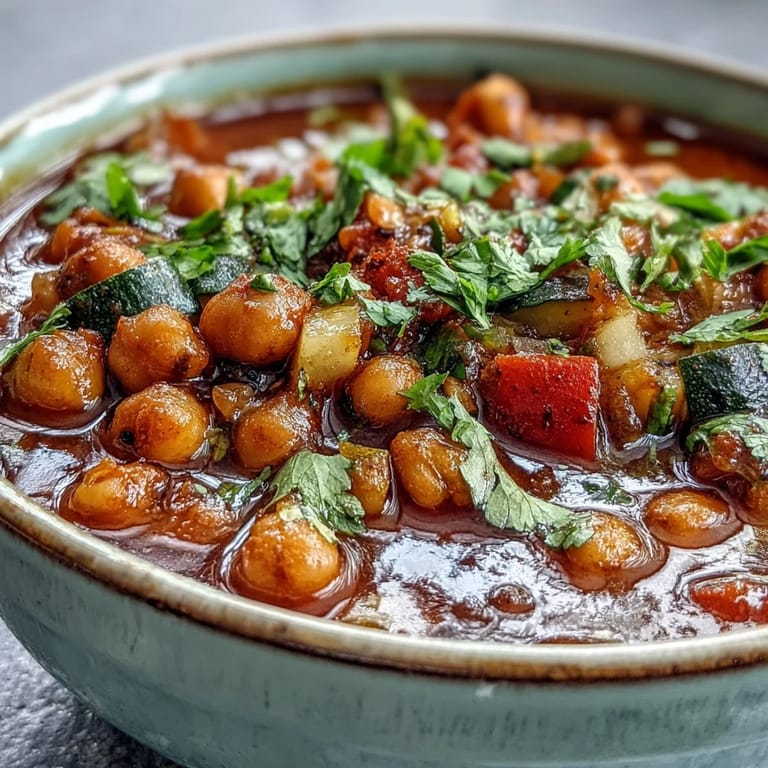
Save There's something about the smell of cumin hitting hot oil that makes me pause whatever I'm doing. A few years back, I was going through one of those phases where I wanted to eat better but didn't want to sacrifice flavor, and this stew landed on my stove by accident—a mix of what I had in the pantry and a vague craving for something warm and spiced. That first bowl changed how I thought about plant-based cooking; it was so deeply satisfying that my skeptical dinner guests actually asked for the recipe.
I made this for my mom during a particularly gray February when she needed comfort food but was trying to cut back on heavy meals. She sat at my kitchen counter with a glass of wine, and I remember her closing her eyes on that first spoonful—the kind of moment that tells you the dish is working. She's made it three times since, which feels like the highest compliment.
Ingredients
- Olive oil (2 tablespoons): Use something you actually like tasting; cheap oil will make itself known in every bite.
- Onion (1 large, diced): The foundation of everything good that's about to happen in this pot.
- Garlic (2 cloves, minced): Don't skip this or use the jarred stuff—fresh garlic is the difference between okay and memorable.
- Carrots (2 medium, diced): They soften into the broth and add a subtle sweetness that plays beautifully against the spices.
- Red bell pepper (1, diced): The bright color isn't just pretty; it brings a slight sweetness and keeps the stew from tasting one-dimensional.
- Zucchini (1, diced): It melts into the background but adds body and absorbs all those warming spice flavors.
- Chickpeas (2 cans, drained and rinsed): The backbone of this stew; rinsing them matters because the liquid makes everything cloudy and bitter.
- Ground cumin (1 teaspoon): This is the heartbeat of the whole thing—earthy and warming.
- Ground coriander (1 teaspoon): It rounds out the cumin with something almost citrusy and gentle.
- Smoked paprika (1 teaspoon): This gives the stew depth and a whisper of smokiness that makes people ask what you did differently.
- Ground turmeric (1/2 teaspoon): Beyond the color, it brings an almost mineral quality and is doing good things for your body.
- Chili flakes (1/2 teaspoon, adjust to taste): Start here and taste as you go; this is where personal preference lives.
- Black pepper (1/2 teaspoon): Fresh ground makes all the difference; pre-ground loses its bite.
- Sea salt (1 teaspoon): Taste matters here too; you might need a touch more depending on your broth.
- Diced tomatoes (1 can): They add acidity that brightens everything and prevents the stew from tasting muddy.
- Vegetable broth (3 cups): This is where quality quietly matters; a good broth will make you wonder why your cooking suddenly tastes better.
- Fresh spinach or kale (2 cups, chopped): Added at the end so it stays bright and tender rather than turning into mush.
- Lemon juice (from 1 lemon): This is your secret weapon—it wakes everything up at the last moment and ties the flavors together.
- Fresh cilantro or parsley (for garnish): It looks nice, but more importantly, the freshness cuts through the richness.
Tired of Takeout? 🥡
Get 10 meals you can make faster than delivery arrives. Seriously.
One email. No spam. Unsubscribe anytime.
Instructions
- Wake up the oil:
- Pour the olive oil into a large pot over medium heat and let it get shimmering—you're looking for that moment when it moves across the bottom like silk. If it's just sitting there, the heat isn't quite right yet.
- Coax out the onion's sweetness:
- Add the diced onion and let it soften for 3 to 4 minutes, stirring every so often until the pieces turn translucent and the kitchen starts smelling intentional. You'll know it's ready when there's barely any white left showing.
- Build the vegetable foundation:
- Toss in the garlic, carrots, bell pepper, and zucchini, stirring as you go for about 5 minutes. You're not looking for them to be cooked through yet—just starting to soften at the edges and to release their aromas into the pot.
- Bloom the spices:
- Add the cumin, coriander, smoked paprika, turmeric, chili flakes, black pepper, and salt all at once, stirring constantly for just about 1 minute. This is crucial; you're letting the heat coax out the essential oils in the spices, and you'll smell the exact moment when it's done—it gets almost fragrant and alive.
- Build the broth:
- Pour in the chickpeas, diced tomatoes (with their juice), and vegetable broth, stirring to bring everything together. Bump the heat up until you see an active simmer, then pull it back to medium-low and let it bubble away uncovered for 20 to 25 minutes, stirring occasionally so nothing sticks to the bottom.
- Finish with greens:
- Add the spinach or kale and cook just until it's wilted and the color turns from bright to deep, which takes about 2 to 3 minutes. Don't let it cook longer or it loses its vitality.
- Brighten with acid:
- Squeeze in the lemon juice and stir through, then taste—you might want a pinch more salt, a crack more pepper, or a tiny bit more heat. This is your moment to make it exactly right.
- Serve and celebrate:
- Ladle it hot into bowls and top with fresh cilantro or parsley, letting people adjust the heat with more chili flakes if they want.
 Save
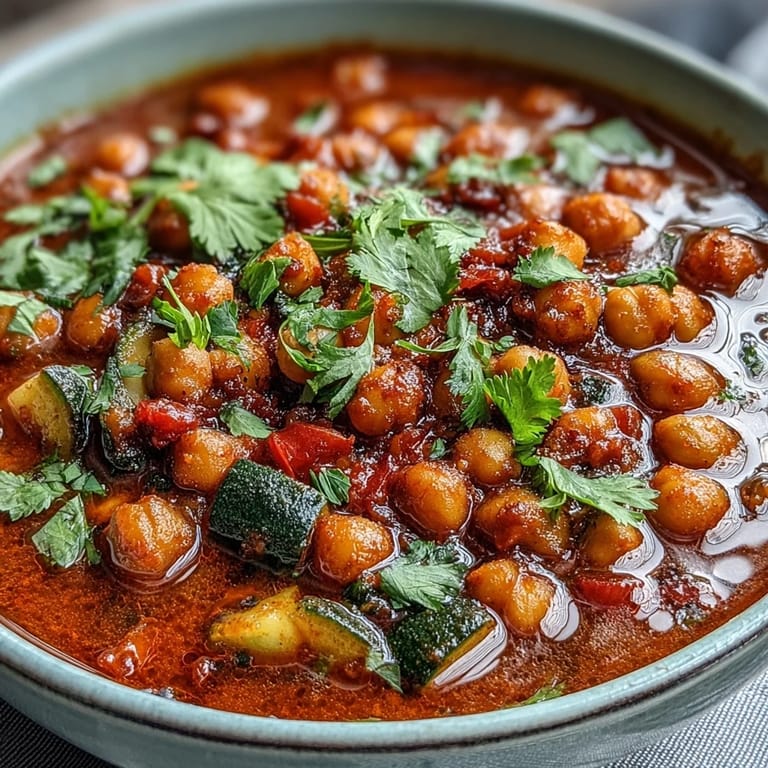
Save There was an evening when a friend came over unexpectedly, and I had just pulled this stew off the heat. Watching her eat bowl after bowl while we talked made me realize this dish does something special—it feeds you and somehow makes conversation easier. Now whenever people need comfort food or I need to prove that eating well doesn't mean eating boring, this is what I make.
When to Add Texture and Richness
Sometimes the stew tastes perfect but feels almost too light, and that's the moment to get creative. A handful of diced sweet potato or eggplant adds substance and fiber in a way that feels natural rather than forced. You can also blend a cup of the finished stew and stir it back in for a creamier base that still tastes clean and spiced—it's a trick that sounds fussy but takes about three minutes and transforms the whole thing.
What to Serve It With
The stew stands beautifully on its own, but something absorbs all those spices even better. Brown rice soaks up the broth like a sponge, quinoa adds a nuttiness that plays well with the cumin and coriander, and crusty bread becomes essential for wiping the bowl clean. My personal move is a simple green salad on the side to cut through the warmth—the contrast is exactly right.
Adjusting the Heat and Making It Your Own
The chili flakes here are a starting point, not a law. If you love heat, double them; if spice scares you, use half. I've also noticed that the longer the stew sits, the spicier it gets because the flakes keep releasing, so a pot that feels perfectly balanced on day one might feel peppery by day three. You can always adjust with more broth or a touch of honey if you've gotten too aggressive.
- Taste constantly while cooking, especially when adjusting spices—it takes 30 seconds and prevents regrets.
- Leftovers actually improve after a day in the fridge as flavors meld and deepen.
- This freezes beautifully for up to three months, so make extra without guilt.
 Save
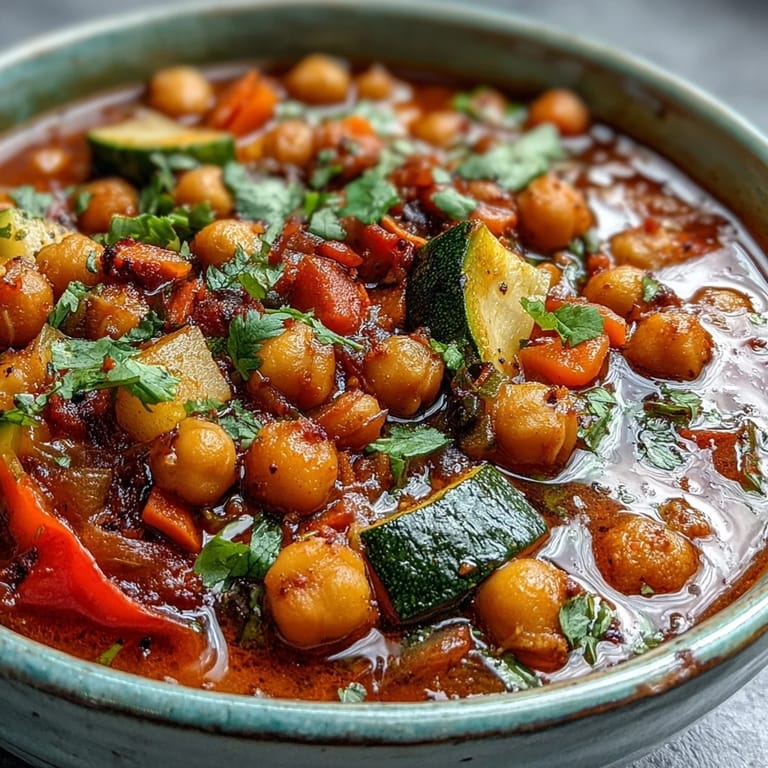
Save This stew taught me that sometimes the best meals are the ones that sneak up on you, that start as practical and become something people remember. It's still what I reach for when I need to feel grounded, or when I want to feed people something honest and warm.
Recipe FAQs
- → Can I make this stew ahead of time?
Yes, this stew actually tastes better the next day as flavors meld. Store in an airtight container in the refrigerator for up to 4 days or freeze for up to 3 months.
- → How can I make this stew more filling?
Serve over brown rice, quinoa, or with crusty bread. You can also add sweet potato cubes or diced eggplant during the simmering stage for extra substance.
- → Can I use dried chickpeas instead of canned?
Absolutely. Soak 1 cup dried chickpeas overnight, then cook until tender before adding to the stew. This will extend your total preparation time.
- → How do I adjust the spice level?
Start with less chili flakes and add more to taste. For a milder version, omit the chili flakes entirely. The smoked paprika provides warmth without excessive heat.
- → What herbs work best for garnish?
Fresh cilantro adds brightness, while parsley offers a more subtle finish. You can also try fresh mint or basil for a different flavor profile.