 Save
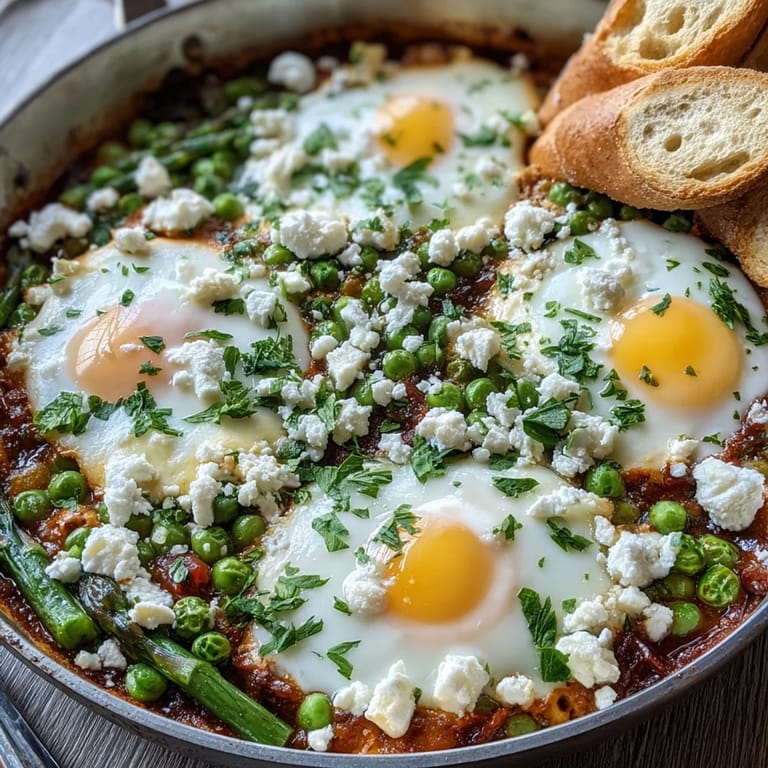
Save I discovered this version of shakshuka on a random Tuesday afternoon when my farmer's market haul included the most beautiful bunch of spring vegetables—asparagus still dewy, fresh peas that practically glowed green, and broad beans I'd never actually cooked before. Something about their tender brightness made me abandon the recipe I'd planned and instead build a sauce around them, watching how the eggs nestled into the bubbling tomato base like little gifts. It became one of those meals that feels both impressive and completely forgiving, the kind you make when you want to feel like you've done something special without the stress.
I made this for my sister's surprise visit last spring, and watching her tear into a piece of bread to catch the runny yolk and soak up that spiced tomato sauce—that's when I knew this was a keeper. She asked for the recipe before she'd even finished eating, which tells you everything you need to know about how this one lands.
Ingredients
- Olive oil: Use something you actually like the taste of here, since it's not cooking down into obscurity—it adds personality to the base.
- Onion and garlic: These are your flavor foundation, so don't rush the onion softening; it makes the whole sauce sweeter and deeper.
- Red bell pepper: The brightness matters both for color and for a subtle sweetness that balances the spices.
- Asparagus: Cut into 2 cm pieces so they cook evenly and don't disappear into the sauce.
- Fresh or frozen peas and broad beans: Frozen actually works beautifully here and is honestly more reliable than fresh for texture.
- Canned tomatoes: Choose whole or crushed depending on your preference for sauce texture; passata makes it silkier.
- Tomato paste: This concentrates the umami and deepens the whole sauce, so don't skip it.
- Ground cumin: Toasting it briefly in the pan releases this warm, earthy note that anchors everything.
- Smoked paprika: The smoke is key—it adds complexity that makes people ask what your secret ingredient is.
- Ground coriander: Just a whisper of this brightens the spice blend without announcing itself.
- Chili flakes: Leave them out if heat isn't your thing, or double them if you like a real kick.
- Large eggs: Room temperature eggs slide into the sauce more gently, though cold ones work fine too.
- Fresh parsley or mint: Mint feels more spring-like here, but parsley is the traditional choice if that's what you have.
- Feta cheese: It melts just slightly from the heat and adds a salty, tangy finish that ties everything together.
- Lemon wedges: Essential for brightness; squeeze them right over your egg.
Tired of Takeout? 🥡
Get 10 meals you can make faster than delivery arrives. Seriously.
One email. No spam. Unsubscribe anytime.
Instructions
- Build your base:
- Heat olive oil in a large, deep skillet over medium heat and cook the onion for 4 to 5 minutes until it turns soft and translucent. The pan should smell sweet and inviting by the end; that's your signal you're ready to move on.
- Layer in the aromatics:
- Stir in the garlic and red bell pepper, cooking for 2 to 3 minutes until they soften slightly. You'll notice the garlic releases its aroma almost immediately—that's when you know the temperature is right.
- Bloom the spices:
- Add the cumin, smoked paprika, coriander, and chili flakes, stirring for about 1 minute until the spices become fragrant and darker. This is the moment that transforms the whole dish from ordinary to something with real depth.
- Build the sauce:
- Stir in the tomato paste first, letting it caramelize slightly for a minute, then add your canned tomatoes and a pinch of salt and pepper. Simmer uncovered for 10 minutes, stirring occasionally, until the sauce thickens and darkens slightly.
- Add the spring vegetables:
- Toss in the asparagus, peas, and broad beans, cover the pan, and cook for 7 to 8 minutes until they're just tender but still have a hint of firmness. Taste a piece of asparagus—it should have a little resistance when you bite it, not be completely soft.
- Create wells for the eggs:
- Using the back of your spoon, gently press into the sauce to create 4 to 6 small wells, spacing them evenly so each egg has room to cook. The sauce should be gently simmering at this point.
- Crack and poach:
- Carefully crack an egg into each well, trying to keep the yolk intact and separate from the others. Cover the pan and reduce heat to medium-low, then cook for 5 to 7 minutes, checking after 5 minutes to see if the whites have set while the yolks stay runny.
- Finish and serve:
- Remove from heat and scatter fresh parsley or mint and crumbled feta across the top. Serve immediately with lemon wedges and crusty bread for soaking up every last drop of sauce.
 Save
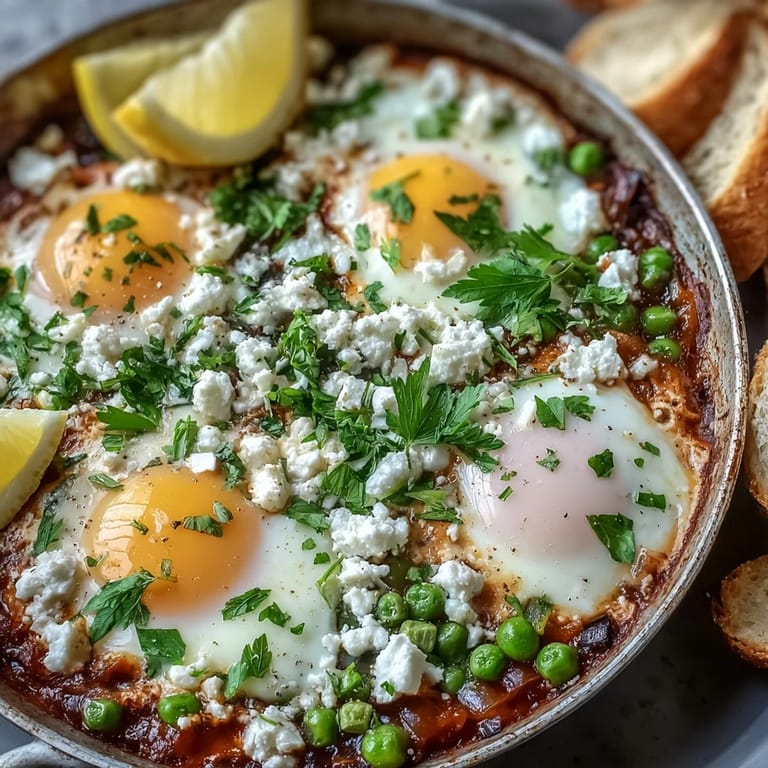
Save There's something almost meditative about watching those eggs slowly poach in the spiced sauce, the moment when the kitchen fills with the smell of cumin and smoked paprika and you realize you're about to eat something truly delicious. It's the kind of meal that brings people together, especially when you serve it straight from the pan with bread for tearing and sharing.
Why Spring Vegetables Make All the Difference
Using fresh, seasonal vegetables doesn't just taste better—it actually changes how the dish feels on your plate and in your mouth. Peas and broad beans have a natural sweetness and tenderness that frozen versions can't quite match, though honestly, frozen works beautifully too and is sometimes more convenient. Asparagus adds a slight earthiness and texture contrast that makes every bite interesting, so don't skip it even if you think it might be redundant with the other greens.
Customizing Your Shakshuka
This recipe is genuinely flexible, which is part of why I love making it—you can adapt it based on what's in your fridge or what mood you're in. Spinach works beautifully stirred in at the end, zucchini adds a tender sweetness if you dice it small, and even a handful of fresh dill scattered on top at the very end brings a completely different but equally lovely flavor. The base sauce is forgiving enough that you can swap vegetables without changing the fundamental character of the dish.
Serving Suggestions and Pairings
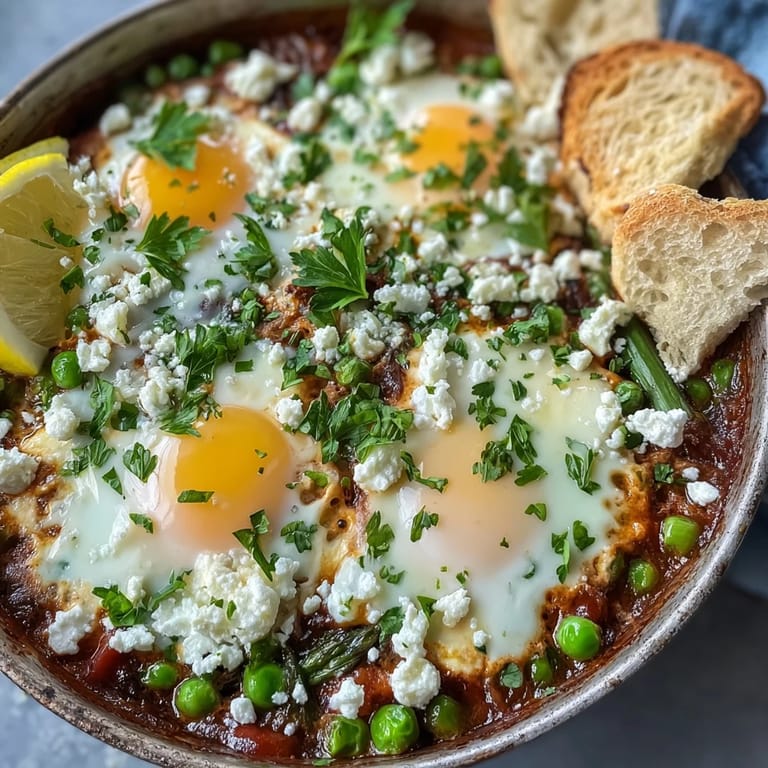
Shakshuka was made to be served straight from the pan with good bread for breaking and soaking up that incredible sauce—nothing fancy needed, just something sturdy enough to handle the liquid. I love making this for weekend brunch or a casual dinner when I want something that feels special without fussing, and it's the kind of dish that actually gets better if you have to reheat it. The eggs are best enjoyed immediately, but you can make the sauce ahead and cook the eggs just before serving if that helps with timing.
- Serve with warm pita, flatbread, or sourdough torn into pieces for dipping.
- A simple green salad on the side balances the richness of the eggs, especially if you include a lemony dressing.
- For brunch, pair with fresh mint tea or a crisp white wine, both of which complement the spring flavors perfectly.
 Save
Save This shakshuka became one of my go-to meals because it hits that sweet spot between feeling like an accomplishment and being genuinely easy to pull together. Every time I make it, I'm reminded why I fell in love with this dish that first spring afternoon.
Recipe FAQs
- → Can I use frozen vegetables instead of fresh?
Absolutely. Frozen peas and broad beans work beautifully in this dish. Simply add them directly to the sauce without thawing—they'll cook through during the simmering time. You may need to extend the cooking time by 1-2 minutes to ensure they're heated through and tender.
- → How do I know when the eggs are perfectly cooked?
The eggs are done when the whites are completely opaque and set, but the yolks still jiggle slightly when you gently shake the pan. This usually takes 5-7 minutes over gentle heat. For firmer yolks, cover and cook for an additional 2-3 minutes. Keep an eye on them as they can overcook quickly.
- → What can I serve with this shakshuka?
Warm crusty bread, pita, or flatbread is ideal for soaking up the flavorful sauce. You could also serve with cooked grains like couscous or quinoa for a more substantial meal. A simple green salad with lemon dressing balances the rich, spiced flavors perfectly.
- → Can I make this ahead of time?
You can prepare the vegetable sauce up to a day in advance and store it in the refrigerator. Reheat gently before adding the eggs—the eggs should always be cooked fresh just before serving as they don't reheat well and can become rubbery.
- → How can I make this vegan?
Simply omit the eggs and feta. For protein, add drained canned chickpeas or white beans when you add the vegetables. You could also crumble firm tofu into small cubes and add them during the last few minutes of cooking, or serve with dollops of vegan yogurt on the side.
- → Can I adjust the spice level?
Certainly. Start with half the amount of chili flakes if you prefer milder heat. You can always add more along with the vegetables. For extra warmth without too much heat, increase the smoked paprika or add a pinch of cayenne. Fresh chopped chili adds both heat and brightness.