 Save
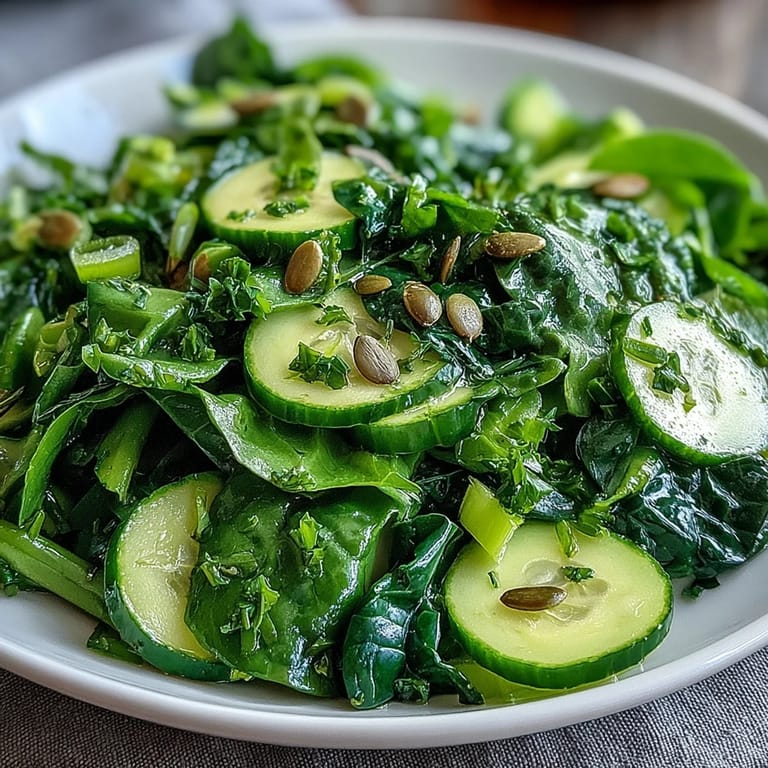
Save There's something about the moment you slice into a crisp cucumber and watch the knife glide through without resistance—that's when I knew this salad would become my go-to answer when someone asks what I'm making for lunch. One afternoon, I was standing in front of my fridge feeling uninspired, surrounded by an abundance of green vegetables that seemed to be having a quiet conversation without me. I decided to stop overthinking and just layer them all together, then dress them with the simplest vinaigrette I could manage. The result was so bright and alive on the plate that I found myself making it again the very next day.
I brought this salad to a potluck once, genuinely nervous that something so straightforward would get overlooked next to casseroles and pasta dishes. Instead, people kept coming back for more, and someone asked if I'd made it that morning—they could taste the freshness. That's when I realized this salad doesn't need to be complicated or trendy to matter; it just needs to be real and intentional.
Ingredients
- Mixed baby greens (6 cups): Choose a blend that includes spinach, arugula, kale, or romaine for complexity; baby greens are tender enough to let the vinaigrette coat them without bruising, unlike sturdy heads of lettuce that often feel watery.
- Cucumber, thinly sliced (1): This is your hydration hero, bringing cool crispness that makes every bite refreshing; slice it thin so it mingles with the other vegetables rather than dominating.
- Celery, thinly sliced (1 cup): Don't skip this one for its quiet texture—it adds a gentle snap that keeps the salad from feeling mushy and provides a subtle mineral note.
- Green bell pepper, julienned (1 cup): Raw bell pepper carries a subtle sweetness that balances the acidity of the vinaigrette without any cooking required.
- Zucchini, thinly sliced (1 cup): Use a mandoline if you have one to keep slices delicate and consistent; raw zucchini is lighter and more interesting than cooked.
- Fresh parsley, chopped (1/2 cup): This is where the 'glowing' in the name really comes from—parsley adds vibrant color and a fresh herbal note that ties everything together.
- Extra virgin olive oil (3 tablespoons): This is not the place to use ordinary oil; good olive oil is essential because it's doing most of the flavor work in such a simple dressing.
- Fresh lemon juice (2 tablespoons): Squeeze it fresh the moment before you make the vinaigrette so you capture all that bright, volatile acidity.
- Apple cider vinegar (1 tablespoon): It adds a subtle complexity that straight lemon juice alone cannot achieve, rounding out the dressing beautifully.
- Dijon mustard (1 teaspoon): This acts as an emulsifier, helping the oil and acid marry together so your dressing doesn't separate; it also adds a gentle tang.
- Sea salt (1/2 teaspoon): Coarse sea salt dissolves more gradually than table salt, distributing flavor more evenly throughout the salad.
- Freshly ground black pepper (1/4 teaspoon): Always grind it fresh; pre-ground pepper has lost its volatile oils and tastes dusty by comparison.
- Pumpkin seeds or sunflower seeds, optional (1/4 cup): If you want crunch and a touch of earthiness, these seeds transform the salad from delicate to satisfying.
Tired of Takeout? 🥡
Get 10 meals you can make faster than delivery arrives. Seriously.
One email. No spam. Unsubscribe anytime.
Instructions
- Gather and prepare your vegetables:
- Wash everything thoroughly and pat it dry—wet vegetables will dilute your vinaigrette and make the salad soggy. Slice, chop, and julienne with intention so each piece is roughly the same size and will dress evenly.
- Build your salad base:
- Toss the mixed greens with the cucumber, celery, bell pepper, zucchini, and parsley in a large bowl; don't dress it yet. Take a moment to appreciate how vibrant it looks—that's the promise of what's coming.
- Create the vinaigrette:
- In a small bowl, whisk the olive oil, lemon juice, apple cider vinegar, and Dijon mustard together until they begin to emulsify and turn slightly creamy. Add the salt and pepper, tasting as you go—this is your chance to adjust the balance before it meets the vegetables.
- Dress and serve:
- Pour the vinaigrette gently over the salad and toss with light hands, turning the vegetables until everything glistens evenly. Sprinkle with seeds if using, and serve immediately while everything is still bright and crisp.
 Save
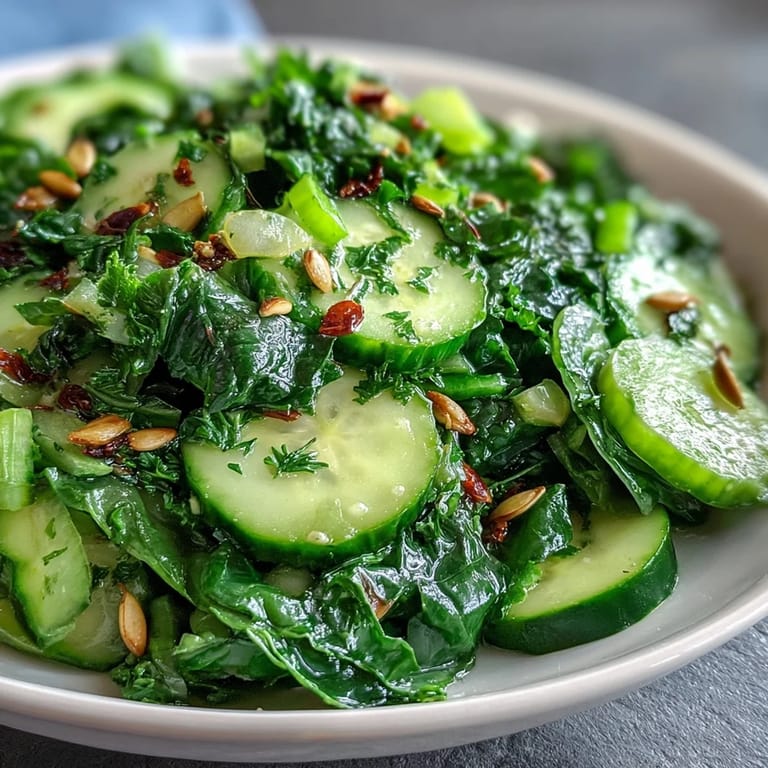
Save There was a moment when someone who usually skips salads at dinner took a second helping without being asked, and in that small gesture, I understood that this salad works because it respects the vegetables instead of trying to overshadow them. It's become my litmus test for whether I'm listening to what food is actually asking for.
The Magic of Raw Vegetables
Raw vegetables speak a language that cooking often silences—crisp, bright, and alive with their own natural sweetness. I used to overcomplicate salads with roasted vegetables and heavy dressings until I realized that the simplest versions were the ones I kept returning to. The key is understanding that raw doesn't mean boring; it means honoring what each ingredient brings to the table without changing its fundamental nature.
Building Layers of Flavor
The vinaigrette here works because it balances multiple dimensions of taste—the brightness of lemon, the depth of apple cider vinegar, the gentle bite of mustard, and the richness of good olive oil. I learned this by making salads with too many competing flavors and realizing that restraint often produces more memorable results. Sometimes what feels like missing an ingredient is actually the presence of balance.
Customization and Flexibility
This salad is a template, not a prison—it invites you to respond to what you have and what you're craving. When avocado is in season, add it; when you want crunch, scatter seeds across the top; when mint catches your eye at the market, tear it in and let it transform the whole experience. The foundation is strong enough to hold whatever you want to build on it.
- Fresh mint, cilantro, or dill can replace parsley if you want to shift the herbal profile entirely.
- A lime and jalapeño variation works beautifully if you want heat and a different kind of brightness.
- Grilled chicken, chickpeas, or baked tofu turn this into a complete meal instead of a side dish.
 Save
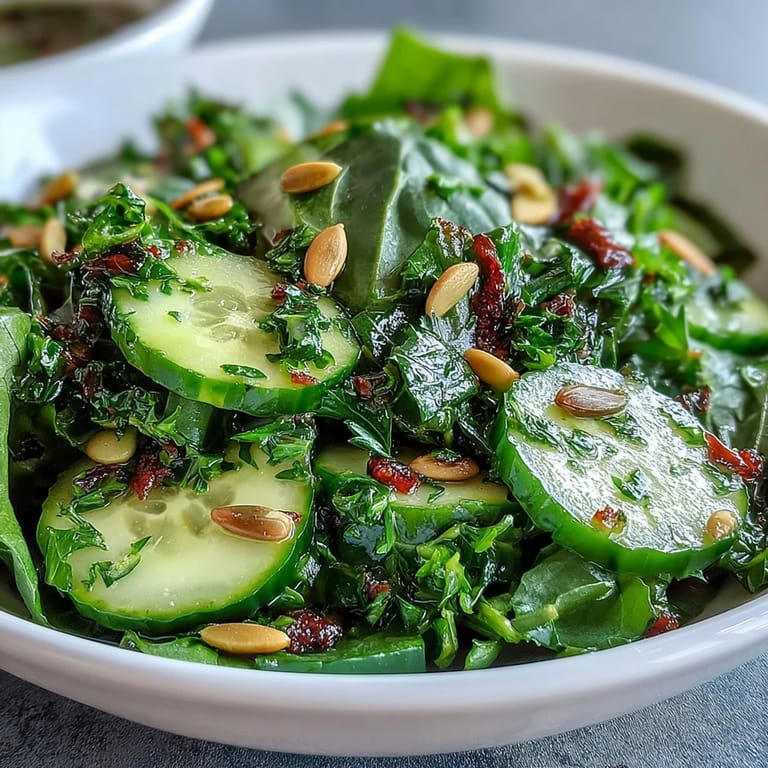
Save This salad has become the answer I reach for when I want to feel nourished without fuss, and that simplicity is its greatest strength. Make it once and you'll understand why it keeps appearing on tables, in lunch boxes, and at gatherings where people actually ask for the recipe.
Recipe FAQs
- → How long does this salad stay fresh?
Best enjoyed immediately after tossing with vinaigrette to maintain crispness. If meal prepping, store vegetables and dressing separately for up to 3 days.
- → Can I use different greens?
Absolutely. Spinach, arugula, kale, romaine, or mixed spring greens all work beautifully. Choose your favorites or whatever looks fresh at the market.
- → What other vegetables can I add?
Sliced radishes, shredded carrots, snow peas, or fresh herbs like mint and basil make excellent additions while keeping the vibrant green theme.
- → Is the vinaigrette adjustable?
Yes. Add more honey or maple syrup for sweetness, increase mustard for extra tang, or swap apple cider vinegar with white wine vinegar for a milder flavor.
- → How can I add more protein?
Top with grilled chicken, baked tofu, chickpeas, hard-boiled eggs, or edamame to transform this into a complete protein-rich meal.