 Save
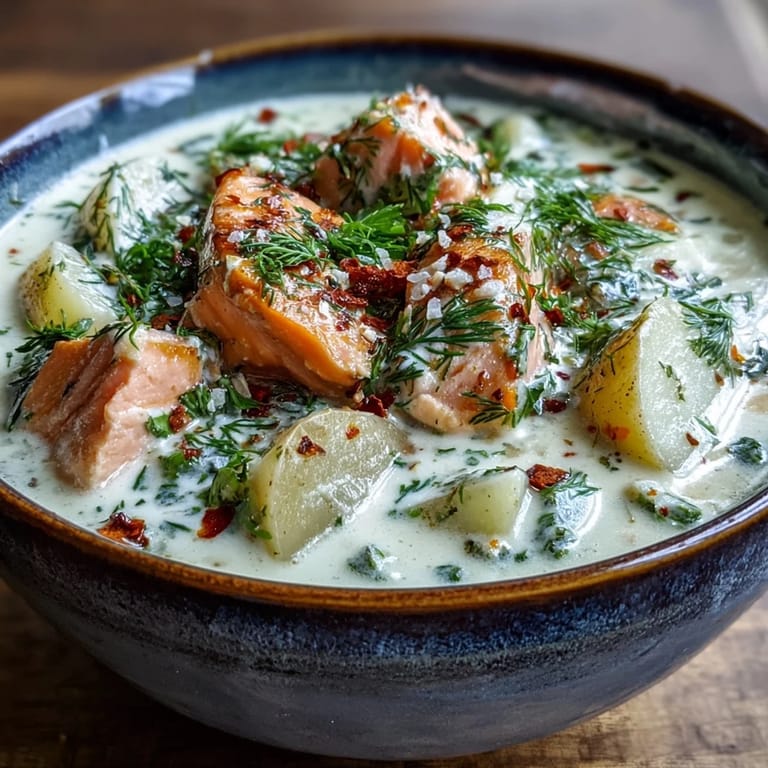
Save There's something about the way steam rises from a bowl of Finnish salmon soup that instantly transports me back to a small coastal cottage where my grandmother taught me that the best meals don't need fuss—just good ingredients and patience. She'd say the Nordic cooks knew a secret: simplicity was sophistication, and a pot of salmon, potatoes, and cream could tell the story of an entire culture. That afternoon, watching her cube the salmon with practiced hands while the butter sizzled with onions, I realized this wasn't just soup—it was comfort distilled into a single bowl. The dill she scattered at the end caught the light like tiny green brushstrokes on cream, and I understood why people returned to this dish again and again.
I made this soup for my roommate on a Wednesday night when she was feeling under the weather, and she sat at our kitchen table watching me work, her mood visibly shifting with each aromatic layer I built. When she took that first spoonful, something quiet happened—her shoulders relaxed, and she looked up with genuine gratitude. That's when I knew this recipe wasn't just food; it was a small act of care that actually worked.
Ingredients
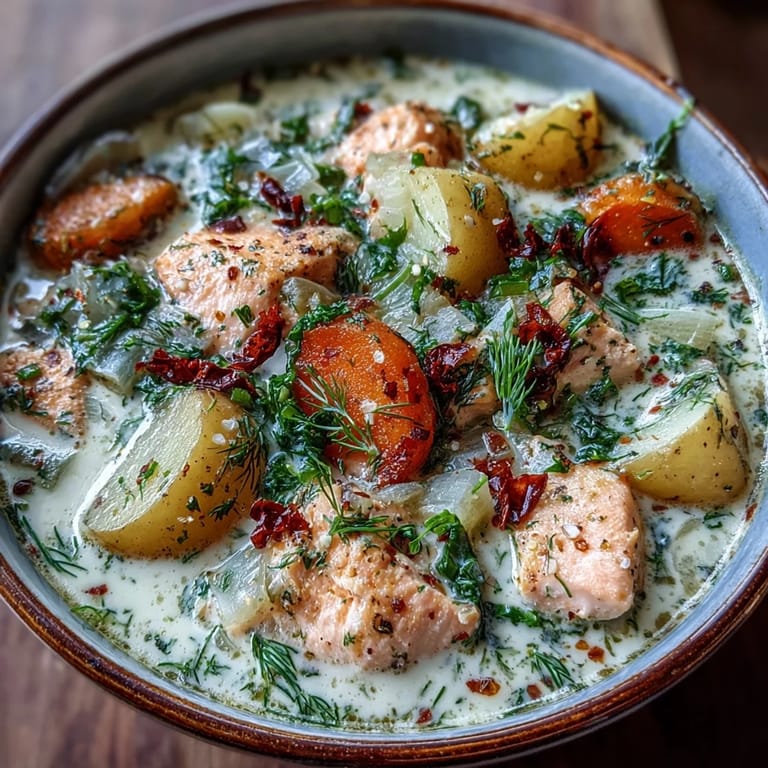
- Salmon fillet (400 g): The heart of this soup—buy it fresh and cut it into bite-sized pieces yourself so the texture stays delicate; ask your fishmonger for skinless, boneless if you want to skip that step.
- Potatoes (600 g): Waxy varieties like Yukon Gold hold their shape better than floury ones, which would turn the broth starchy and dull.
- Carrot (1 medium): Sliced rather than diced so it cooks evenly and doesn't dominate the flavors.
- Leek (1 small): The white and light green parts offer a gentle onion flavor without harshness; always slice lengthwise first, then across, to remove any hidden soil.
- Yellow onion (1 small): Finely chopped so it softens completely and adds sweetness rather than bite.
- Fresh dill (1 bunch): This is non-negotiable—dried dill tastes like straw compared to fresh, so don't skip it or substitute.
- Fish stock (1 L): If you have homemade, use it; store-bought works beautifully too, though check labels if you're avoiding gluten.
- Heavy cream (200 ml): Full-fat is essential here; lighter creams won't give that silky richness.
- Bay leaf (1): Adds a whisper of complexity and must be removed before serving.
- Salt & white pepper: White pepper keeps the soup visually pristine without specks.
- Butter (1 tbsp): A small amount creates the foundation for everything else.
Tired of Takeout? 🥡
Get 10 meals you can make faster than delivery arrives. Seriously.
One email. No spam. Unsubscribe anytime.
Instructions
- Start with aromatics:
- Melt butter in your pot over medium heat, then add onion, leek, and carrot—listen for that gentle sizzle and watch as they soften and turn translucent, releasing their sweet, layered fragrance. This 4 to 5 minute window is crucial; you're not browning anything, just coaxing out natural flavors.
- Build the base:
- Tumble in your cubed potatoes, add the bay leaf, then pour in fish stock or water and bring everything to a rolling boil. Once it's bubbling, turn the heat down to a gentle simmer and let it cook 12 to 15 minutes until the potatoes are almost soft but still hold their shape.
- Introduce the salmon:
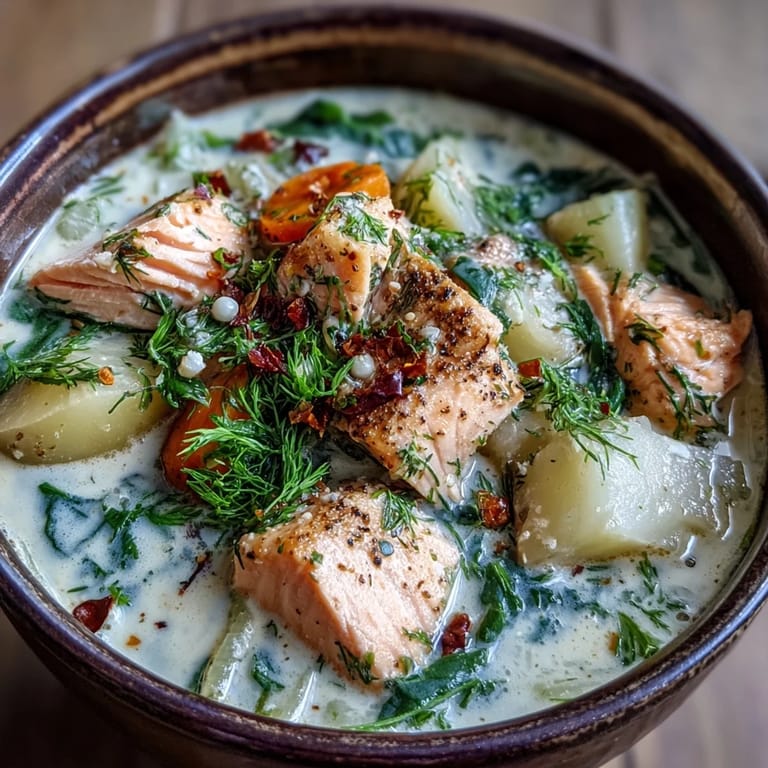
- Gently place salmon cubes into the simmering broth—they should sink slightly and the liquid should return to a gentle simmer within moments. Let them cook for 5 to 6 minutes, just until they turn opaque and flake slightly when nudged with a spoon.
- Finish with cream and herb:
- Pour in heavy cream and stir through your chopped dill, then season carefully with salt and white pepper—taste as you go because every stock is different. Simmer for 2 to 3 more minutes without letting it boil hard, or the cream might separate slightly.
- Final touch:
- Remove from heat, fish out the bay leaf, and ladle into bowls with a generous scatter of reserved fresh dill on top. The steam should carry that dill fragrance straight to your nose.
 Save
Save 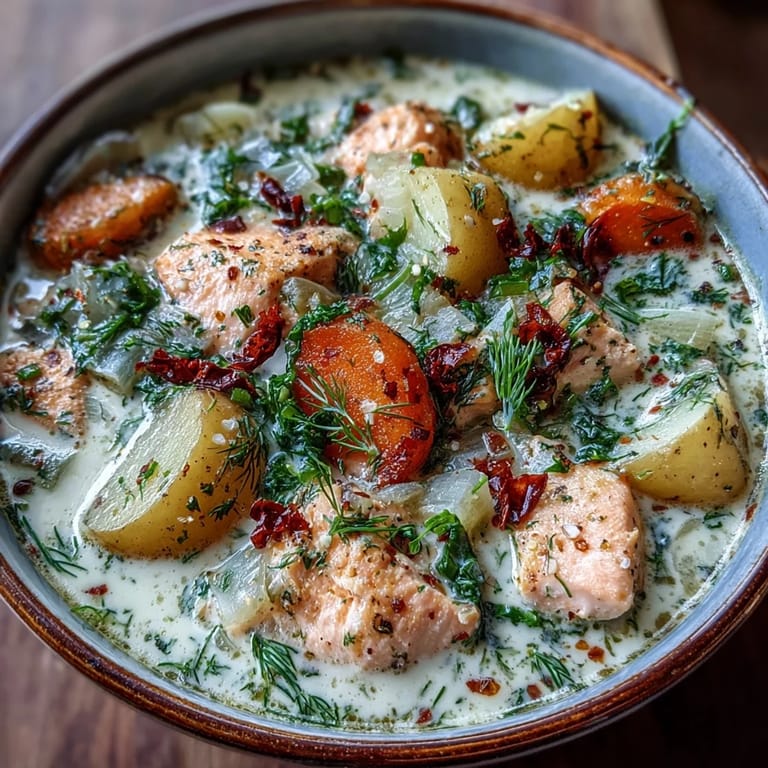 Save
Save My neighbor tasted this soup on a cold autumn evening when I brought her a thermos after she'd had minor surgery, and three days later she called to ask for the recipe because she'd been craving it nonstop. That moment taught me that sometimes the most meaningful cooking isn't about technique or complexity—it's about recognizing when someone needs warmth and meeting them there.
The Nordic Philosophy Behind This Soup
Finnish cooking wasn't born from abundance or showiness; it came from the land, the sea, and the need to create nourishment that lasts. Salmon soup represents that perfectly—it takes what's available, respects each ingredient, and creates something greater than the sum of its parts. There's a lesson in that restraint; not every ingredient needs to shout for attention, and sometimes the best dishes are those that let each flavor speak quietly but clearly.
Timing and Temperature Matter More Than You Think
The difference between a perfect salmon soup and a mediocre one often comes down to heat management rather than technique. Medium heat for the aromatics, a rolling boil for the potatoes, then a gentle simmer for the salmon and cream—each stage has its own rhythm, and once you feel that rhythm, the soup practically makes itself. I've learned that watching the surface of the liquid tells you everything; you want movement but not violence, steam but not aggressive bubbling.
Serving and Storage Wisdom
This soup tastes best within a few hours of making it, though it keeps in the refrigerator for up to two days if you store the cream separately and stir it back in gently when reheating. Rye bread or crispbread alongside transforms this from a side dish into a complete, satisfying meal that feels Scandinavian in spirit. If you're making it ahead for a gathering, heat it gently over low heat rather than using high heat, which risks curdling the cream.
- For extra richness, swirl a small knob of butter into each bowl just before serving.
- Smoked salmon can replace fresh for a deeper, more complex flavor if you're in the mood for something different.
- Adjust the cream amount to your preference—add less for a lighter soup or more for something luxuriously velvety.
 Save
Save 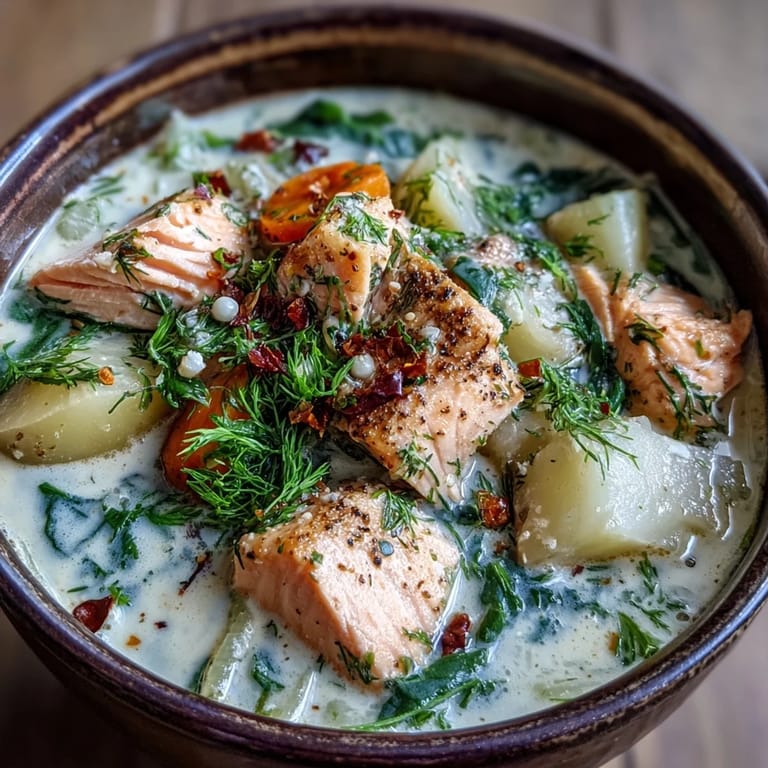 Save
Save This soup has become my go-to when I want to cook something that feels both effortless and meaningful. It's the kind of dish that reminds me why I fell in love with cooking in the first place.
Recipe FAQs
- → Can I use frozen salmon for this soup?
Yes, frozen salmon works well. Thaw completely and pat dry before cutting into cubes to ensure even cooking and prevent excess water in the soup.
- → What can I substitute for heavy cream?
You can use half-and-half for a lighter version, or full-fat coconut milk for a dairy-free alternative. Avoid low-fat options as they may curdle when heated.
- → How do I prevent the salmon from overcooking?
Add salmon when potatoes are nearly tender and simmer gently for only 5-6 minutes. The fish should be opaque and flake easily but remain moist.
- → Can I make this soup ahead of time?
Yes, prepare up to 1 day ahead. Store refrigerated and reheat gently without boiling. Add extra dill before serving to refresh the flavors.
- → What type of potatoes work best?
Waxy potatoes like Yukon Gold hold their shape well in soup. Avoid starchy varieties like Russets, which may break down and make the soup cloudy.
- → Is fish stock necessary or can I use water?
Fish stock adds depth, but water works fine. If using water, consider adding an extra bay leaf or vegetable scraps for more flavor complexity.