 Save
Save There's something about October that makes me crave butternut squash soup—not the Instagram-perfect kind, but the real stuff that fills your kitchen with that sweet, caramelized aroma while you're doing laundry or answering emails. I discovered this particular version on a gray afternoon when I had half an hour to transform a lumpy squash into something that felt like a warm hug. The secret wasn't complicated: roast first, blend smooth, and let the coconut milk do the heavy lifting. It became the soup I made for friends who needed comfort without fuss.
I made this for my neighbor last winter when she was recovering from the flu, and watching her face light up as she tasted it—that moment when someone realizes comfort food can also be genuinely good for you—reminded me why I keep cooking. She asked for the recipe three times that week.
Ingredients
- 1 medium butternut squash (about 1.2 kg), peeled, seeded, and diced: This is your star ingredient, and roasting it brings out a sweetness that makes the whole soup sing without needing honey or brown sugar to hide behind.
- 1 large onion, chopped: The aromatic base that softens into sweetness as it sautés—don't skip the caramelization step, even though it feels slow.
- 2 medium carrots, peeled and chopped: Natural sweetness and body; they dissolve into the soup and add subtle depth that people never quite identify but always notice.
- 2 cloves garlic, minced: Added after the softer vegetables so it doesn't burn and turn bitter—timing matters here.
- 800 ml vegetable stock: Use the best quality you can find; it's the foundation everything else builds on.
- 200 ml coconut milk (or heavy cream for a richer version): The final flourish that transforms the soup from good to velvety; coconut adds exotic warmth while cream goes classic.
- 2 tbsp olive oil: Split between roasting the squash and sautéing vegetables—good oil makes a real difference in flavor.
- 1/2 tsp ground cumin: The spice that makes people ask what that warm note is; it bridges sweet and savory perfectly.
- 1/4 tsp ground nutmeg: A whisper, not a shout—use a microplane if you have one for fresher flavor.
- Salt and black pepper, to taste: Added in stages so you control the final seasoning and nothing becomes over-salted.
- Fresh parsley or coriander, chopped: Brightness against the richness; coriander brings an unexpected floral note if you're feeling adventurous.
- Toasted pumpkin seeds: Crunch and nuttiness that keeps the soup from feeling monotonous in texture.
Tired of Takeout? 🥡
Get 10 meals you can make faster than delivery arrives. Seriously.
One email. No spam. Unsubscribe anytime.
Instructions
- Fire up the oven and start roasting:
- Preheat to 200°C (400°F) and toss your diced butternut squash with 1 tablespoon olive oil, salt, and pepper. Spread it out on a baking tray in a single layer—crowding it steams instead of caramelizes, so give it space.
- Let the squash get golden while you prep the base:
- While it's roasting for about 25 minutes, heat the remaining tablespoon of olive oil in a large pot over medium heat. Add your chopped onion and carrots; let them soften and turn golden at the edges, which takes about 5–7 minutes and fills your kitchen with the most comforting smell.
- Wake up the spices:
- Once the vegetables are soft, add your minced garlic, cumin, and nutmeg and stir constantly for about a minute—you want to hear the spices sizzle slightly and release their aroma. This is the moment the soup stops smelling like vegetables and starts smelling like dinner.
- Bring everything together:
- Add the roasted squash to the pot and pour in your vegetable stock. Bring it to a boil, then reduce the heat and let it simmer gently for 10 minutes to let the flavors mingle.
- Blend it smooth:
- Remove from heat and use an immersion blender to purée everything until silky and velvety. If you're using a regular blender, let it cool slightly first and blend in batches, holding the lid gently so steam doesn't explode everywhere—I learned that lesson the hard way.
- Finish with richness and check your seasoning:
- Stir in your coconut milk or cream, heat gently without boiling, and taste as you add salt and pepper. The soup should taste balanced—not too salty, with the spices humming in the background.
- Serve it like you mean it:
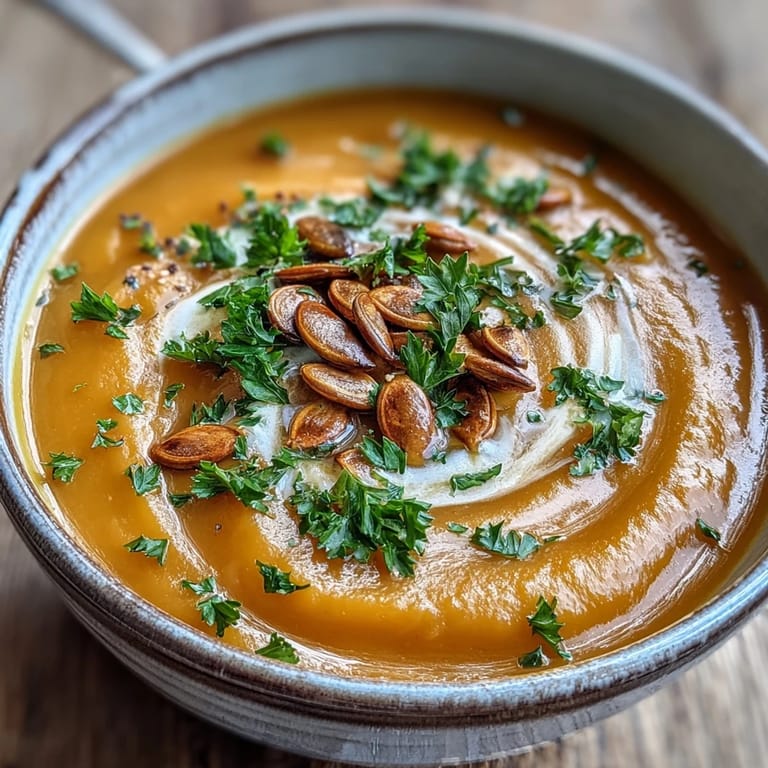
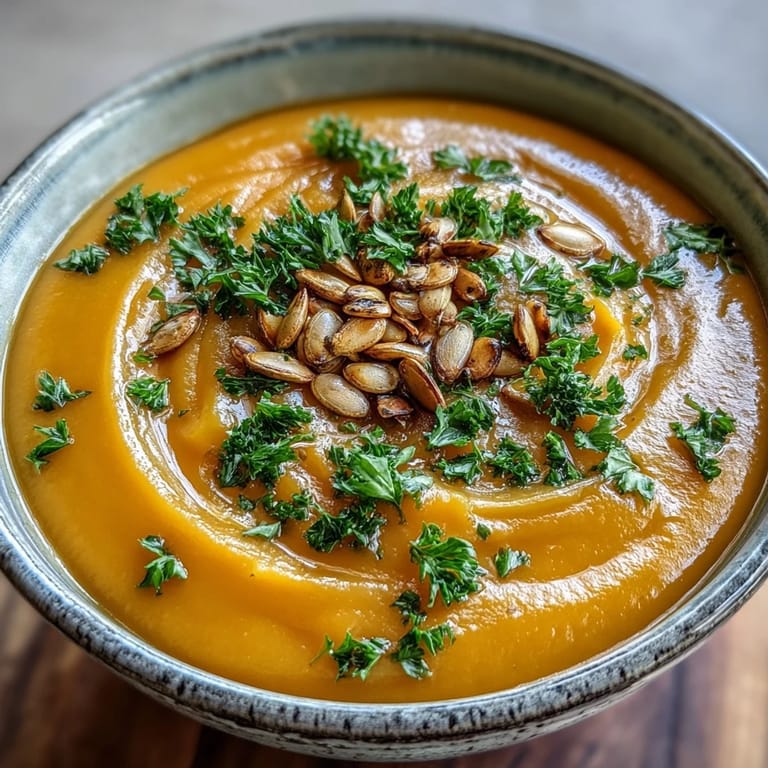
- Ladle into bowls and top with fresh herbs, toasted pumpkin seeds, and maybe another swirl of coconut milk. Let people see what went into it; presentation makes comfort food feel special.
 Save
Save There's a moment that happens almost every time I make this soup where someone takes their first spoonful and goes quiet for a second, and I know they're tasting how simple ingredients can become something that feels almost luxurious. That's the whole reason this recipe matters to me.
When to Make This Soup
October through February is prime butternut squash season, but honestly, good frozen or even canned roasted squash works fine if you're craving this in summer. I've made it in spring when the weather turned unexpectedly cold and needed something that felt like comfort without heaviness. The key is that it works any time you want a meal that nourishes without pretending to be anything other than what it is.
Variations and Swaps That Actually Work
Once you understand how this soup works, you can play with it: pumpkin instead of butternut squash gives you deeper color and slightly different spice notes, sweet potato adds earthiness, or even a mix of both. Some friends swear by adding a pinch of chili flakes for heat, and I've added a tablespoon of apple cider vinegar at the end to cut through richness on heavy days. Dairy cream instead of coconut milk takes it from exotic to traditional French bistro, which is its own kind of wonderful.
Storage, Leftovers, and Making It Ahead
This soup actually improves after a day or two in the refrigerator because flavors have time to settle and deepen. It keeps for about four days refrigerated and freezes beautifully for up to three months—just leave out the garnish until you're reheating and serving. I often make a big batch on Sunday and eat it throughout the week, each time adding fresh herbs and seeds so it never feels repetitive.
- Cool the soup completely before freezing in portions, and leave a tiny bit of headspace since it expands slightly.
- When reheating from frozen, do it gently over medium-low heat with a splash of stock or water if it's gotten too thick.
- Don't skip the garnish even on leftovers—it's what reminds you this is a finished dish and not just leftovers.
 Save
Save This soup has become the one I make when I want to feel like I'm taking care of people—including myself. It's simple enough to not stress over and good enough to feel like you tried.
Recipe FAQs
- → Can I make this soup ahead of time?
Absolutely. This soup actually improves after resting in the refrigerator for 1-2 days as the flavors deepen and meld. Store in an airtight container and reheat gently over medium-low heat, stirring occasionally. You may need to add a splash of stock or water when reheating if it has thickened.
- → What's the purpose of roasting the squash first?
Roasting caramelizes the natural sugars in butternut squash, creating a depth of flavor that boiling alone cannot achieve. The high heat concentrates sweetness and adds subtle nutty notes, resulting in a more complex and satisfying finished dish.
- → Can I substitute coconut milk?
Yes. Heavy cream creates an even richer finish, while whole milk offers a lighter alternative. For a dairy-free option, cashew cream or additional vegetable stock work well. Each substitution slightly alters the final texture and richness level.
- → How do I achieve the smoothest texture?
Blend thoroughly with an immersion blender for 2-3 minutes, or work in batches using a regular blender. For ultra-silky results, pass the puréed soup through a fine-mesh sieve before adding the coconut milk. This removes any remaining fibrous bits.
- → What can I use instead of nutmeg?
Ground cinnamon, allspice, or a pinch of smoked paprika work beautifully. Fresh ginger adds bright warmth, while curry powder creates an entirely different flavor profile. Each spice brings unique character to the comforting base.