 Save
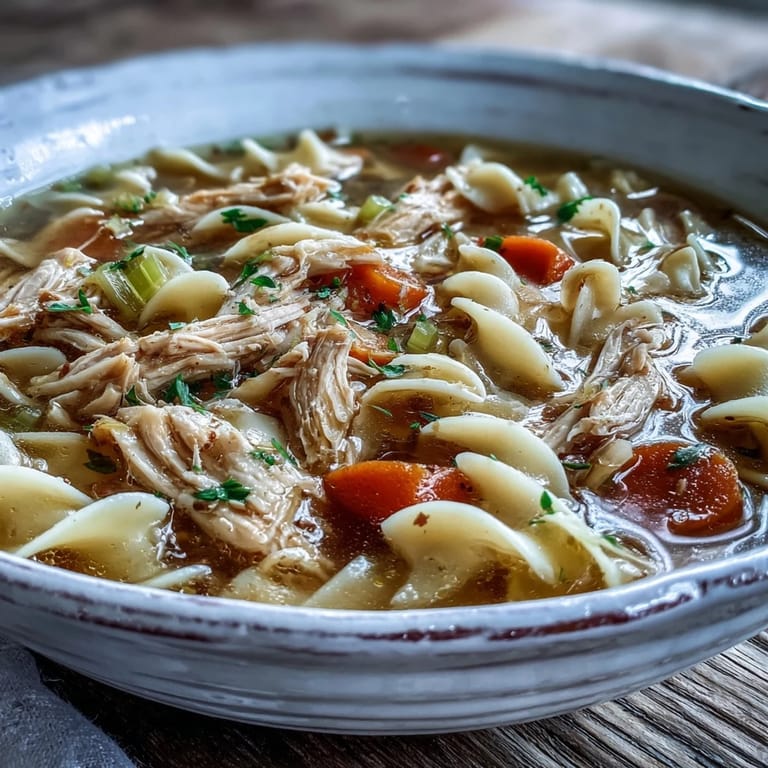
Save My grandmother used to make this soup on the first truly cold day of autumn, before the leaves even finished turning. She'd stand at the stove with a wooden spoon in one hand and a cup of tea in the other, letting the broth simmer while she told stories about her own mother's kitchen. Years later, I finally understood why she never rushed it—there's something about chicken and noodle soup that demands patience and rewards it with pure comfort.
I made this for a friend who'd just moved into a new apartment on a rainy Tuesday evening. She opened her nearly empty fridge while I was chopping vegetables, and we both laughed at how little she'd unpacked. By the time the soup was ready, steam fogged up her kitchen windows and somehow the whole place felt less lonely. She still texts me photos of the pot when she makes it now.
Ingredients
- Bone-in, skinless chicken thighs or breasts: Thighs give richer flavor and stay moist longer, but a mix of both works beautifully if you want variety in texture.
- Low-sodium chicken broth: This lets you control the salt and prevents the soup from tasting tinny—homemade is ideal, but good quality store-bought does the job.
- Yellow onion, carrots, and celery: This trio is the foundation, creating a subtle sweetness that balances the savory broth as everything simmers together.
- Garlic, bay leaves, thyme, and rosemary: Don't skip the dried herbs—they perfume the entire pot and make each spoonful feel intentional.
- Wide egg noodles: They catch the broth beautifully and have a tender bite that holds up without falling apart.
- Fresh parsley and lemon juice: These finishing touches wake up the soup just before serving, adding brightness that cuts through the richness.
Tired of Takeout? 🥡
Get 10 meals you can make faster than delivery arrives. Seriously.
One email. No spam. Unsubscribe anytime.
Instructions
- Build the Base:
- Place chicken and broth in a large pot and bring to a gentle boil, skimming away any gray foam that bubbles up—this keeps the broth clear and clean tasting. You'll know you've skimmed enough when the surface looks mostly calm.
- Add Flavor Layers:
- Stir in onion, carrots, celery, garlic, bay leaves, thyme, rosemary, salt, and pepper, then reduce heat to a steady simmer and cover. Let it cook for 25 to 30 minutes while the kitchen fills with an aroma you'll recognize immediately as home.
- Shred the Chicken:
- Pull the pot from heat, carefully lift out the chicken pieces, and shred the meat using two forks—it should fall apart with almost no resistance if it's cooked through. Discard bones and any skin that clung on.
- Bring It Back Together:
- Return the shredded chicken to the pot and increase heat to medium-high until the broth reaches a gentle boil again. This is your signal that everything is ready for the noodles.
- Cook the Noodles:
- Add egg noodles and let them cook for 8 to 10 minutes, stirring occasionally so they don't stick to the bottom. Taste one to make sure it's tender but still has a slight resistance when you bite it.
- Final Touches:
- Stir in fresh parsley and a squeeze of lemon juice if you're using it—this brightens everything and adds a subtle complexity. Remove bay leaves, taste for salt and pepper, and serve in wide bowls while the soup is still steaming.
 Save
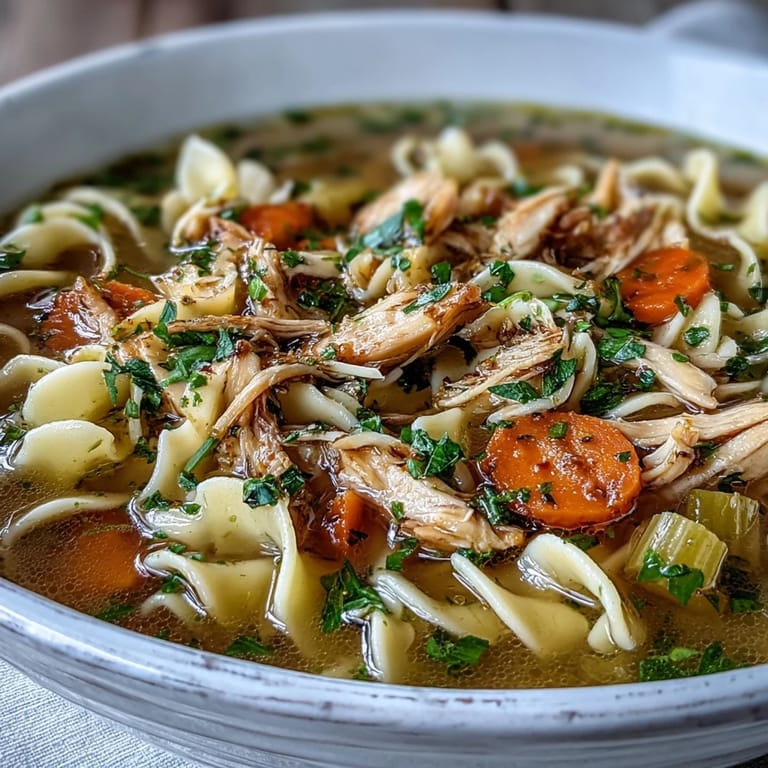
Save There was a moment during a snowstorm when three of us huddled in my kitchen, bowls in our hands, and nobody spoke for a while. The only sounds were spoons against ceramic and the wind outside the window. Somehow, this simple soup had created the kind of quiet that feels like belonging, and I realized that's what comfort food really means.
Choosing Your Chicken
Bone-in thighs are my first choice because they're forgiving—they stay moist and flavorful even if the soup simmers a few minutes longer than planned. Breasts work too, but they can turn stringy if overcooked, so watch the timing more carefully. Many home cooks swear by using one of each for the best of both worlds: thigh flavor with breast texture.
The Power of the Simmer
A rolling boil will toughen the chicken and turn your broth cloudy, so resist the urge to crank the heat. Instead, aim for that gentle bubble that barely breaks the surface—you should see only a few wisps of steam rising from under the lid. This slow, patient cooking is what draws out the real chicken flavor and makes the vegetables melt into the broth instead of falling apart.
Make It Your Own
The beauty of this soup is how easily it adapts to what you have on hand or what you're craving on any given day. A handful of fresh spinach stirred in at the very end adds color and nutrition without changing the fundamental character of the dish. Some cooks add a pinch of chili flakes for warmth, while others reach for crushed black pepper or a dash of garlic powder for extra depth.
- A splash of fresh lemon juice added just before serving brightens everything and prevents the soup from tasting heavy.
- Substitute gluten-free noodles if needed—they cook in the same time and taste nearly identical.
- Serve alongside crusty bread or a simple green salad for a complete meal that feels both casual and intentional.
 Save
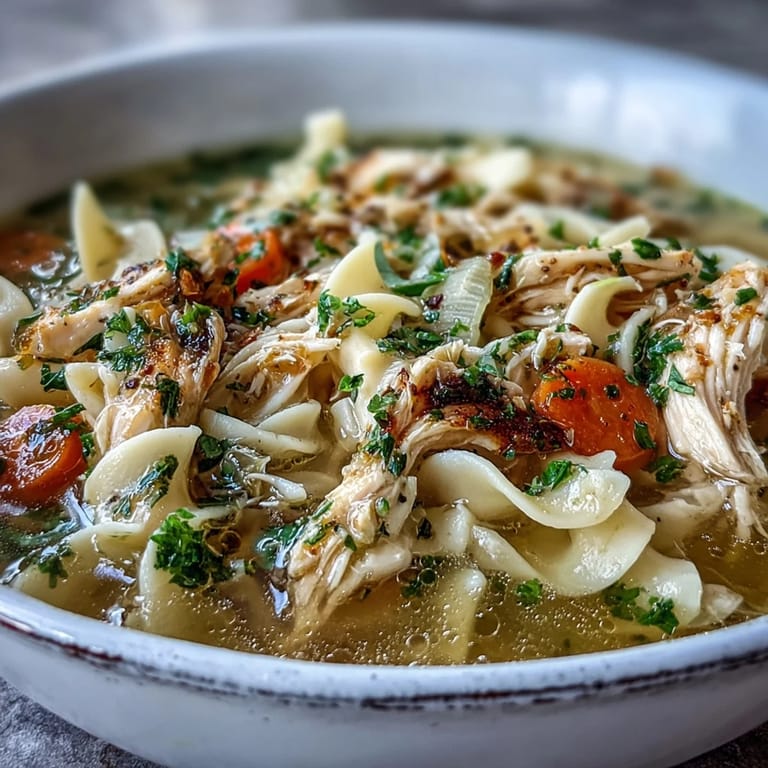
Save This soup has become my default response to almost every occasion: a new job, a cold, a hard week, or simply Tuesday. It reminds me that the simplest meals often carry the most meaning.
Recipe FAQs
- → Can I use boneless chicken instead of bone-in?
Yes, you can use boneless chicken thighs or breasts. However, bone-in pieces add more flavor to the broth. If using boneless, reduce cooking time to 20-25 minutes to prevent overcooking.
- → What type of noodles work best for this soup?
Wide egg noodles are traditional and hold up well in the broth. You can substitute with gluten-free noodles, rice noodles, or even small pasta shapes like ditalini or shells depending on your preference.
- → How do I store leftover chicken and noodle soup?
Store in an airtight container in the refrigerator for up to 4 days. Note that noodles will absorb liquid over time. Add extra broth when reheating. You can also freeze the soup without noodles for up to 3 months and add fresh noodles when serving.
- → Can I add other vegetables to this soup?
Absolutely! Consider adding peas, green beans, corn, or spinach. Heartier vegetables like potatoes or parsnips work well too. Add them according to their cooking time—potatoes earlier, leafy greens at the end.
- → Why do the noodles get mushy when stored?
Noodles continue absorbing liquid as the soup sits, causing them to soften and swell. To prevent this, store noodles separately or cook them fresh when reheating. Alternatively, slightly undercook the noodles if you plan to have leftovers.
- → How can I make the broth more flavorful?
Use bone-in chicken pieces, add extra aromatics like fresh herbs or garlic, or simmer the broth longer. You can also add a parmesan rind while cooking or finish with a splash of white wine for depth of flavor.