 Save
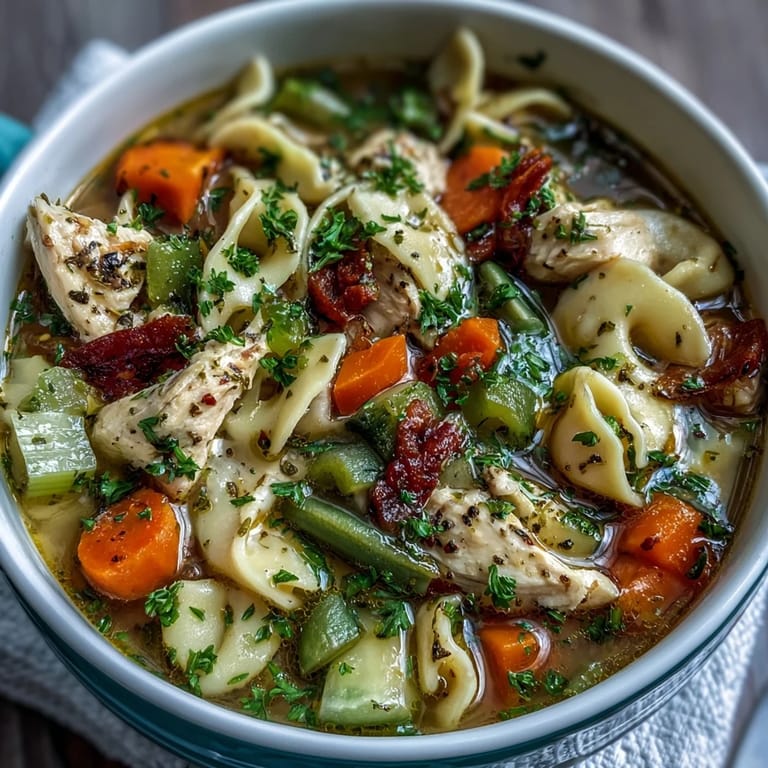
Save There's something about the smell of sautéed onions and celery that makes a kitchen feel lived-in and warm. My neighbor stopped by on a gray afternoon while I was testing this soup, and within seconds she was asking what smelled so good. That moment—when someone's drawn in by nothing but steam and aromatics—is exactly why I keep making this chicken and pasta soup. It's the kind of dish that feels both simple and special, like you're giving someone a hug in a bowl.
I made this for my sister after she mentioned craving something comforting but not heavy. She sat at my kitchen counter with a mug of tea while I worked, and by the time I ladled out the first bowl, she was already tearing up bread into it. That's when I knew the recipe had landed exactly right—it had that quality of feeling both nourishing and gentle, the kind of food that shows up for you on days when you need it most.
Ingredients
- Boneless, skinless chicken breasts (2, about 400 g, cubed): Cutting them into small cubes means they cook through quickly and distribute evenly throughout the soup instead of hogging one corner of the pot.
- Medium carrots (2, peeled and sliced): The slight sweetness balances the herbiness, and slicing rather than dicing keeps them from disappearing.
- Celery stalks (2, sliced): This is your aromatic foundation—don't skip it, even if you think you don't like celery.
- Medium onion (1, finely chopped): The base of everything good, and finely chopping it means it breaks down into the broth rather than sitting as chunks.
- Garlic cloves (2, minced): Add it after the softer vegetables to keep it from burning and turning bitter.
- Medium zucchini (1, diced): It adds body without heaviness and cooks in just minutes.
- Green beans (1 cup/150 g, 1-inch pieces): Trim both ends—I learned this the hard way after biting into a woody bit.
- Frozen peas (1 cup/150 g): No need to thaw; they cook perfectly from frozen and brighten up the whole pot.
- Canned diced tomatoes (1 can/400 g, undrained): The juice is liquid gold for the broth, so never drain it.
- Fresh parsley (2 tablespoons, chopped): Stir it in at the very end so it stays vibrant green instead of turning muddy.
- Small pasta shapes (1 cup/100 g, ditalini or elbow): Smaller shapes distribute throughout the soup instead of settling to the bottom like tiny, slippery rocks.
- Low-sodium chicken broth (8 cups/2 liters): Low-sodium lets you control the salt and prevents the soup from tasting like a salt lick by serving three.
- Olive oil (1 tablespoon): Just enough to encourage the vegetables to soften without making the soup slick.
- Dried thyme (1 teaspoon): It whispers rather than shouts, giving herbal depth without overwhelming the delicate chicken.
- Dried basil (1 teaspoon): Dried basil behaves differently than fresh—it steeps into the broth and becomes part of the fabric of the soup.
- Bay leaf (1): Fish it out before serving unless you enjoy the surprise of bitter leaves between your teeth.
- Salt and freshly ground black pepper: Taste as you go and adjust at the end—this prevents over-salting from the start.
Tired of Takeout? 🥡
Get 10 meals you can make faster than delivery arrives. Seriously.
One email. No spam. Unsubscribe anytime.
Instructions
- Build Your Aromatic Base:
- Heat the olive oil in a large soup pot over medium heat, then add the chopped onion, carrots, and celery. Let them sauté for about 5 minutes, stirring occasionally, until the edges of the onion turn translucent and the whole kitchen smells like a cozy restaurant. You're not looking for color here—just tenderness and that foundational fragrance.
- Wake Up the Garlic:
- Add the minced garlic and cook for just 1 minute until it stops being raw and starts being aromatic. If you cook it longer, it turns acrid and disappointed, so timing matters here.
- Begin the Chicken:
- Stir in the cubed chicken and let it cook for 4–5 minutes, stirring occasionally. It won't be fully cooked through yet—that's intentional—but it should have lost its raw, glossy appearance and developed a light golden tinge on some edges.
- Add the Vegetables and Seasonings:
- Toss in the diced zucchini, green beans, canned tomatoes with their juice, thyme, basil, and bay leaf. Season with salt and pepper, then stir everything together so the seasonings distribute evenly. The pot should smell deeply herbal and tomato-y now.
- Bring It to Life:
- Pour in the chicken broth and increase the heat to bring everything to a boil. Once you see the rolling boil, reduce the heat to low, cover the pot, and let it simmer gently for 15 minutes. During this time, the chicken finishes cooking through, and all the vegetables begin surrendering their flavors to the broth.
- Finish with Pasta and Peas:
- Uncover the pot and stir in the small pasta and frozen peas. Let everything simmer uncovered for 10–12 minutes until the pasta is al dente and the chicken is completely cooked through. Stir occasionally so the pasta doesn't stick to the bottom.
- Final Touches:
- Fish out the bay leaf with a spoon—it should come away cleanly now that it's been softened by the heat. Stir in the fresh parsley, taste the soup, and adjust the salt and pepper as needed. Sometimes it needs more than you'd expect, so taste before you season.
 Save
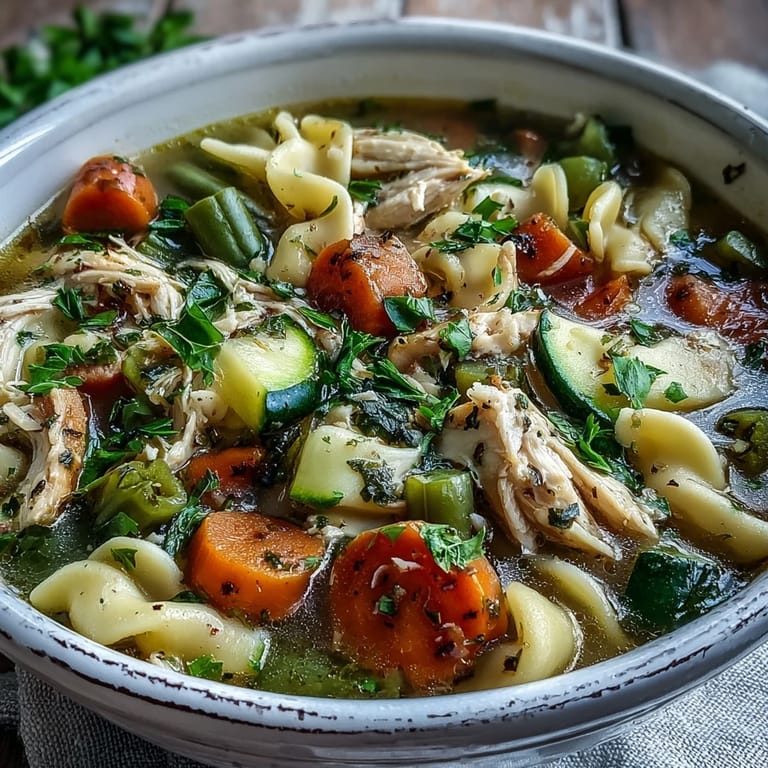
Save My son brought this soup to a potluck at school last year, and I was honestly nervous about how it would travel. But when he came home, he said two kids asked for the recipe, and one classmate had seconds and thirds. That's when I realized this soup has a quiet confidence—it doesn't need to be fancy or complicated to make people feel taken care of.
Variations That Still Feel Like Home
The beauty of this soup is that it actually improves when you swap things around based on what's in your fridge or garden. Last summer, I used fresh corn instead of half the green beans, and it tasted like August in a pot. Once, when I was out of fresh zucchini, I threw in diced bell peppers, and it became something brighter and slightly spicy. The formula stays the same—vegetables, protein, broth, pasta—but the personality changes.
Make It Easier or Different
If you're short on time, rotisserie chicken is your secret weapon. Buy one, shred it, and add it during the last 5 minutes instead of the fresh chicken—the soup becomes even faster and somehow tastes more luxurious. For gluten-free dinners, swap the pasta for a gluten-free version and check your broth label. If you're feeding someone with multiple dietary needs, this soup accommodates them gracefully without feeling like a compromise.
Serving and Storing
Serve this soup hot with crusty bread and maybe a small salad on the side if you want to make it feel like a proper meal. The soup keeps in the refrigerator for up to 4 days in a covered container, and it freezes beautifully for up to 3 months—though I recommend freezing it without the pasta and adding fresh pasta when you reheat it so everything stays tender. Reheating is simple: thaw in the refrigerator overnight if frozen, then warm gently over medium heat, stirring occasionally and adding a splash of broth if it's become too thick.
- Reheat gently to avoid toughening the chicken or turning the vegetables to mush.
- A ladle makes serving neat and warm, and always stir the pot before ladling so you get vegetables in every bowl.
- Extra parsley or a sprinkle of Parmesan on top makes people feel like you fussed over their dinner, even though you really didn't.
 Save
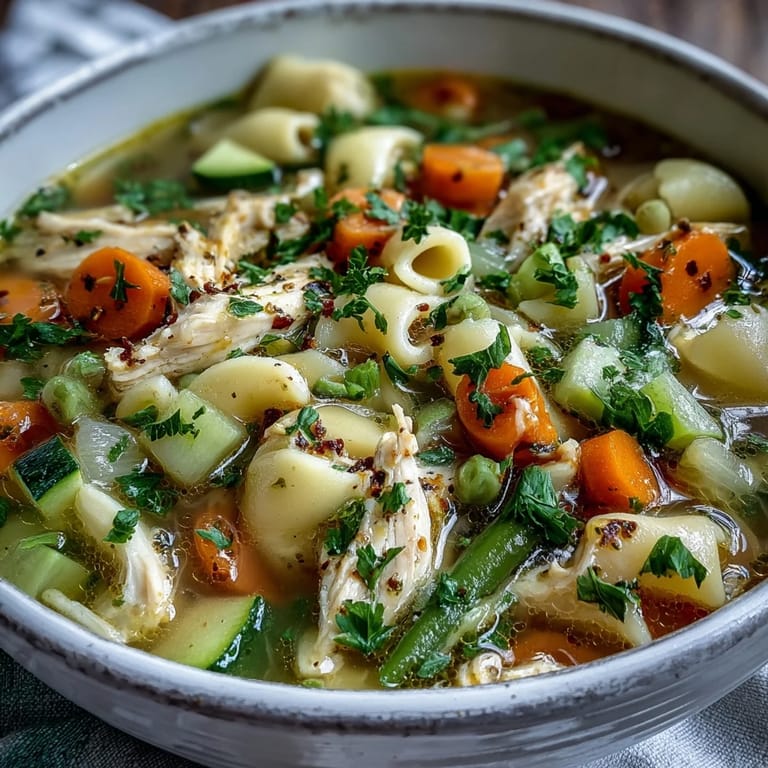
Save This soup is what I make when I want to feed people without feeding them a lecture. It's honest, generous, and it shows up the same way every time—which is exactly what comfort food should do.
Recipe FAQs
- → Can I use rotisserie chicken instead of raw chicken breasts?
Yes, rotisserie chicken works wonderfully and saves time. Simply shred or cube the cooked chicken and add it during the last 10 minutes with the pasta to heat through without overcooking.
- → What pasta shapes work best for this soup?
Small pasta shapes like ditalini, elbow macaroni, orzo, or small shells are ideal. They're easy to eat with a spoon and cook evenly in the broth without overwhelming the other ingredients.
- → How can I make this soup gluten-free?
Simply substitute regular pasta with your favorite gluten-free pasta variety. Also check that your chicken broth is certified gluten-free, as some brands may contain gluten additives.
- → Can I freeze this soup for meal prep?
Yes, but pasta tends to absorb liquid and become mushy when frozen. For best results, freeze the soup without the pasta, then cook fresh pasta when reheating. Store in airtight containers for up to 3 months.
- → What vegetables can I substitute if I don't have all the ingredients?
This soup is very flexible. Try corn, spinach, kale, bell peppers, or butternut squash in place of zucchini or green beans. Use whatever fresh or frozen vegetables you have on hand.
- → How do I store leftovers and how long will they keep?
Store cooled soup in an airtight container in the refrigerator for up to 4 days. The pasta will continue to absorb broth, so you may need to add extra broth or water when reheating.