 Save
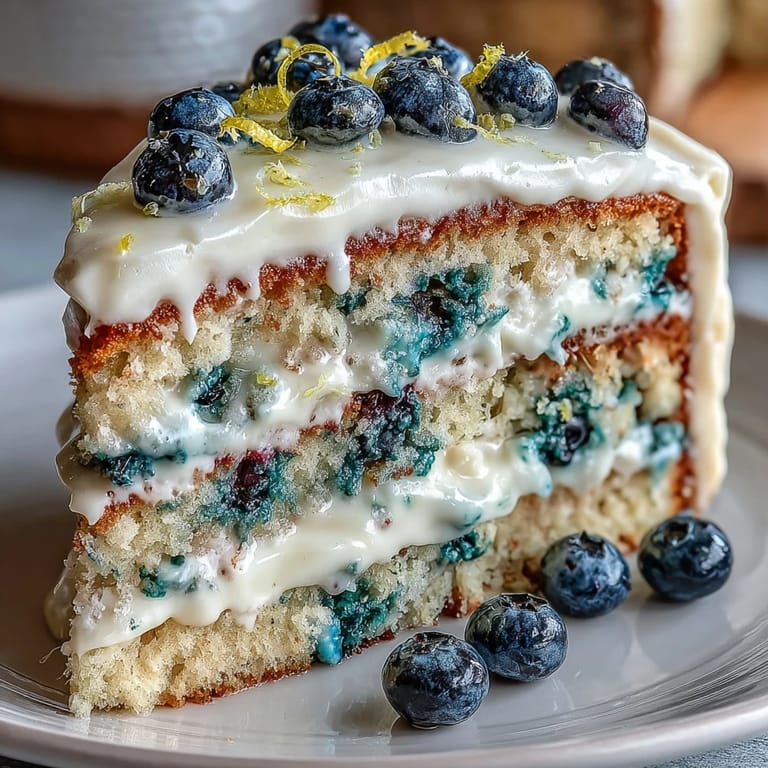
Save My sister called three weeks before her birthday asking if I could make something that tasted like spring—her exact words were "bright and happy, none of that heavy chocolate." I hung up and immediately thought of this lemon blueberry cake, the kind that somehow captures sunshine in every crumb. The first time I made it, my kitchen smelled so intensely of fresh lemon that I had to open every window, and honestly, it was the best problem to have.
I'll never forget assembling this cake at 11 PM on a Friday, frosting getting everywhere because I'd underestimated how soft room-temperature cream cheese becomes under an electric mixer. My partner walked in, tasted a crumb of frosting off my finger, and said "okay, you're making this for every celebration from now on," which felt like the highest compliment possible.
Ingredients
- All-purpose flour (2 1/2 cups): This is your structure—don't skip sifting it with the leavening agents or you'll end up with dense pockets instead of a tender crumb.
- Baking powder and baking soda (2 tsp and 1/2 tsp): They work together to give you that perfect rise and tender texture; use fresh ones or the cake won't climb properly.
- Unsalted butter (1 cup plus 1/2 cup for frosting): Room temperature is non-negotiable here—cold butter won't cream properly with sugar, and you'll lose that light, fluffy base everything depends on.
- Granulated sugar (1 3/4 cups): This sweetens the cake and helps create that tender crumb when creamed with butter—the pale, fluffy mixture is your signal you're on the right track.
- Eggs (4 large, room temperature): Cold eggs won't incorporate smoothly and can seize your batter, so pull them out of the fridge about 30 minutes before you start.
- Fresh lemon zest (2 tbsp, about 2 lemons): Use a microplane for the finest zest—it distributes evenly through the batter instead of becoming little chewy bits.
- Fresh lemon juice (1/3 cup): This is where the brightness lives; bottled juice tastes flat in comparison, so squeeze your own lemons.
- Whole milk (1 cup, room temperature): The temperature matters because it keeps the batter temperature consistent, which means even baking.
- Fresh blueberries (1 1/2 cups): Toss them in a tablespoon of flour right before folding—this simple step keeps them suspended throughout instead of sinking to the bottom like little soggy stones.
- Cream cheese (8 oz, softened): This frosting relies on proper softness; even 15 minutes at room temperature makes a difference in how smoothly it beats.
- Powdered sugar (3 cups, sifted): Sift it before measuring or you'll end up with grainy frosting that refuses to smooth over the cake.
- Vanilla extract (1 tsp) and salt (pinch): These humble ingredients round out the frosting and prevent it from tasting one-dimensionally sweet.
Tired of Takeout? 🥡
Get 10 meals you can make faster than delivery arrives. Seriously.
One email. No spam. Unsubscribe anytime.
Instructions
- Set your oven and prep the pans:
- Preheat to 350°F and line three 8-inch round pans with parchment paper, then grease them generously. This isn't a step to rush—proper prep means your cakes release cleanly.
- Whisk the dry ingredients:
- Combine flour, baking powder, baking soda, and salt in a medium bowl and set aside. This ensures the leavening agents distribute evenly throughout the batter.
- Cream butter and sugar until fluffy:
- Beat them together for 3-4 minutes until the mixture goes from grainy and yellow to pale and cloud-like. This is where you're incorporating air that will make the cake light and tender.
- Add eggs one at a time:
- Beat well after each addition so the eggs emulsify properly into the mixture. If you dump all four in at once, the batter will look broken and separated.
- Mix in lemon zest and juice:
- The mixture might look slightly curdled, which is normal—the acid in the lemon juice reacts with the dairy in the butter, but it comes back together once you add the flour.
- Alternate between flour and milk:
- Start and end with flour: a third of flour, half the milk, another third of flour, the rest of the milk, then the final third of flour. This prevents overmixing, which toughens the crumb.
- Fold in floured blueberries gently:
- Toss the blueberries in that tablespoon of flour first, then fold them in with a rubber spatula using as few strokes as possible. The flour coating reduces their moisture from bleeding into the batter.
- Divide and smooth:
- Pour the batter evenly among the three pans and use a spatula to level the tops. Even baking starts with even distribution.
- Bake until a toothpick comes out clean:
- This takes 25-30 minutes at 350°F; start checking at 25 minutes. The toothpick should have no wet batter clinging to it, though a crumb or two is fine.
- Cool properly before demolding:
- Let the cakes rest in their pans for 10 minutes—this allows them to set just enough to release cleanly—then turn them onto wire racks to cool completely. Never assemble a warm cake or the frosting will melt into soup.
- Make the frosting while cakes cool:
- Beat softened cream cheese and butter until smooth, then gradually add sifted powdered sugar, lemon juice, vanilla, and salt. Beat until fluffy and spreadable, about 2-3 minutes total.
- Assemble the layers:
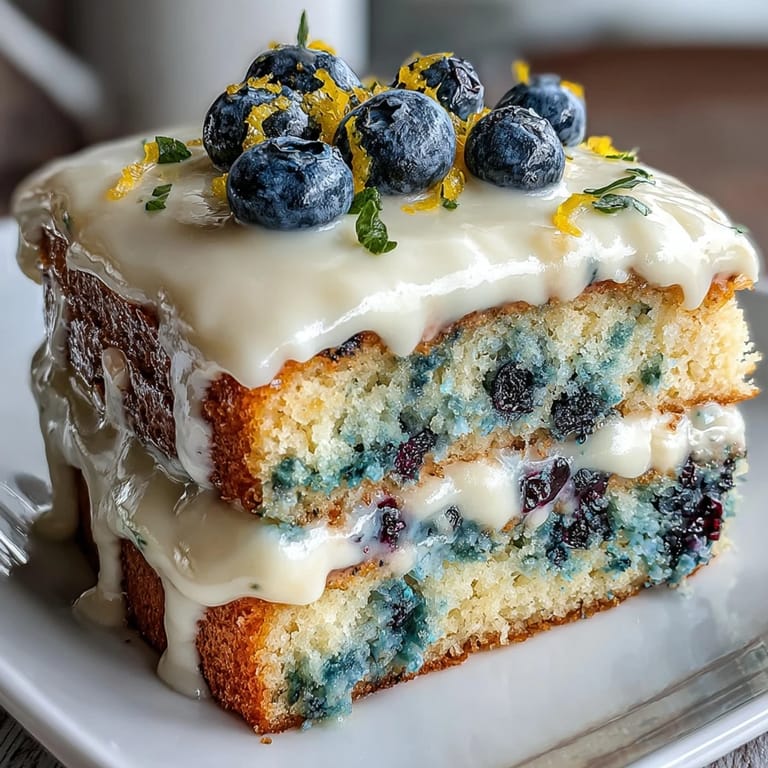
- Place the first cake layer on your serving plate, spread with frosting, repeat with the second layer, then top with the third layer. Frost the top and sides generously, letting the frosting create little peaks if you want it to look homemade and inviting.
- Decorate and chill:
- Add fresh blueberries, lemon zest curls, and edible flowers if you have them. A brief chill in the refrigerator helps the frosting set and makes slicing cleaner.
 Save
Save A few months after making this cake for my sister, her friend texted me asking for the recipe because apparently it had become the most requested dessert at their birthday brunches. That feeling—knowing something you made with your own hands has become part of someone's celebration tradition—that's when you know a recipe is worth keeping.
The Blueberry Secret
Most people don't understand why their blueberries sink to the bottom of cakes, and it's because the berries absorb moisture from the batter and become heavier as they bake. The simple flour coating creates a barrier that keeps them suspended, and once you know this trick, you'll use it forever. It sounds small, but it's the difference between a cake with pretty blueberries distributed throughout and one where they've all collected in a soggy layer at the bottom.
Why Fresh Lemon Matters So Much
Bottled lemon juice tastes tinny and one-dimensional compared to the complexity of fresh-squeezed, and in a cake where lemon is the main flavor character, you really notice the difference. When you squeeze your own lemons, you get the oils and brightness along with the juice, and that's what makes this cake sing. I learned this the hard way by making it with bottled juice once and tasting the flatness immediately—never again.
Assembly and Storage Tips
This cake actually tastes even better on the second day, after the flavors have settled and mellowed into each other. Store it covered in the refrigerator for up to four days, or you can make the layers a full day ahead, wrap them tightly once cool, and assemble just before serving for the freshest frosting texture. For that extra lemony moment my notes mention, make a simple syrup by heating equal parts lemon juice and sugar until the sugar dissolves, then brush each layer before frosting—it adds moisture and an intensified lemon punch.
- If you want to serve it at room temperature, pull it from the fridge about 30 minutes before slicing so the frosting softens and each bite feels luxurious.
- A hot knife dipped in water between slices keeps the frosting from dragging and tearing.
- Leftover cake actually freezes beautifully for up to two months if you wrap the layers individually before frosting, though the frosting doesn't freeze as well as the cake itself.
 Save
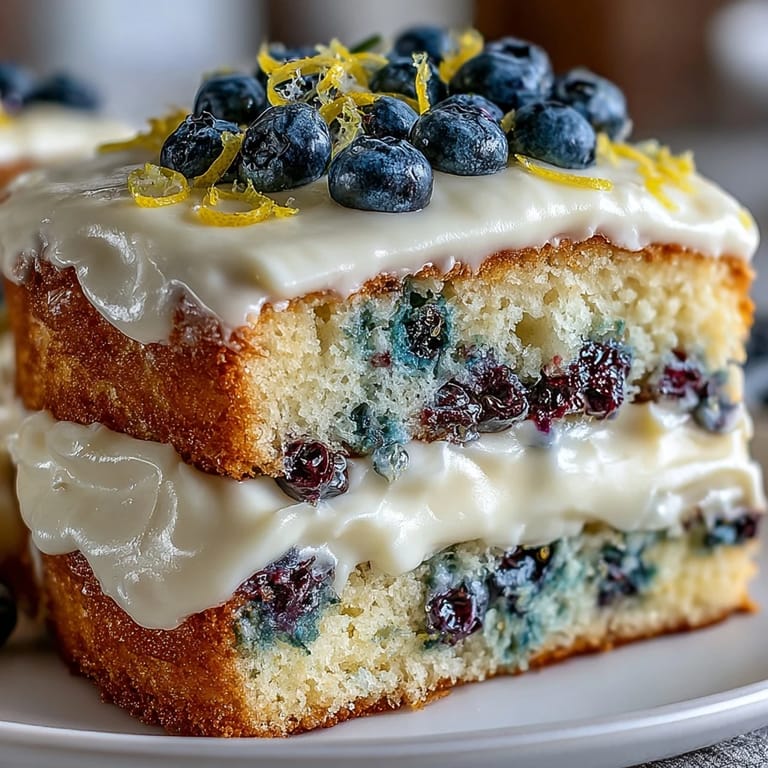
Save This cake tastes like hope and celebration and the moment when winter finally releases its grip and you remember what bright flavors feel like. Every time someone asks you to make it, you're really being asked to bring a little springtime joy to their table.
Recipe FAQs
- → How do I prevent blueberries from sinking?
Toss blueberries with a tablespoon of flour before folding them gently into the batter to keep them evenly suspended during baking.
- → Can this cake be made ahead of time?
Yes, layers can be baked a day in advance, tightly wrapped when cooled, and frosted on the day of serving for best freshness.
- → What is the best way to achieve a bright lemon flavor?
Use fresh lemon zest and juice in both the batter and frosting. Optionally brushing layers with lemon syrup enhances lemon brightness deeply.
- → What tools are needed for baking this cake?
Three 8-inch round pans, mixing bowls, electric mixer, whisk, rubber spatula, wire racks, and a zester or microplane are essential for best results.
- → How should the cake be stored after assembling?
Store the cake covered in the refrigerator to maintain frosting texture and freshness, bringing it to room temperature before serving.
- → Is this cake suitable for special diets?
This dessert is vegetarian but contains gluten, eggs, and dairy. Always verify individual ingredient sources for allergen safety.